Lambda Python: The Hidden Powerhouse Behind Clean, Functional Code
Lambda functions in Python are often dismissed as mere syntactic sugar, a fleeting convenience for one-off operations. Yet beneath their deceptive simplicity lies a tool that redefines modularity, readability, and performance in functional programming. Their ability to encapsulate logic in a single line—without formal declarations—makes them indispensable for developers working with data pipelines, event-driven systems, or high-performance algorithms. The true elegance of lambda expressions emerges when they’re wielded strategically: not as a replacement for full functions, but as a precision instrument for concise, expressive code.
What separates lambda Python from traditional functions isn’t just the absence of a `def` keyword—it’s the philosophy behind them. They embody the principle of functional programming: treating computation as the evaluation of mathematical functions, where behavior is predictable and side effects are minimized. This paradigm shift isn’t just academic; it directly impacts how modern Python applications handle concurrency, data transformation, and even machine learning pipelines. The lambda function’s role extends beyond simple operations, influencing design patterns like decorators, higher-order functions, and even reactive programming frameworks.
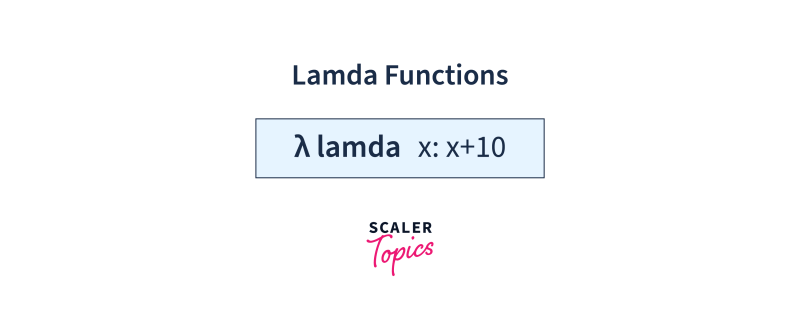
The misconception that lambda Python is limited to trivial tasks ignores its versatility. Whether you’re sorting complex objects, implementing custom reducers, or optimizing database queries, these anonymous functions serve as the glue that binds operations together. Their syntax—`lambda arguments: expression`—is deceptively compact, but mastering it requires understanding Python’s scoping rules, closure behavior, and performance trade-offs. The key lies in recognizing when to use them: as a tool for clarity, not complexity.

The Complete Overview of Lambda Python
Lambda Python functions are anonymous, single-expression functions defined using the `lambda` keyword. Unlike named functions created with `def`, they lack statements, docstrings, or a formal name—yet their impact on code conciseness and functional programming is profound. Their primary use cases include inline operations in higher-order functions like `map()`, `filter()`, and `reduce()`, where brevity aligns with readability. However, their scope isn’t limited to these scenarios; lambda expressions also excel in callbacks, event handlers, and dynamic function generation, where traditional functions would introduce unnecessary verbosity.The power of lambda Python lies in its ability to abstract away boilerplate. For example, a lambda can replace a multi-line function when the logic fits neatly into a single line, such as sorting a list of tuples by the second element: `sorted(pairs, key=lambda x: x[1])`. This conciseness isn’t just about saving lines of code—it’s about maintaining focus on the what rather than the how. Yet, this advantage comes with trade-offs: lambdas are less debuggable, harder to document, and can obscure control flow in complex scenarios. The art of using lambda Python effectively hinges on balancing these trade-offs with the immediate gains in readability and maintainability.
Historical Background and Evolution
The concept of lambda functions traces back to Alonzo Church’s lambda calculus in the 1930s, a foundational theory in computer science that influenced functional programming languages like Lisp and Haskell. When Python was designed in the late 1980s, its creators drew inspiration from these traditions, embedding lambda expressions as a lightweight alternative to full functions. Guido van Rossum’s decision to include them reflected Python’s philosophy of simplicity and pragmatism: provide tools for common tasks without enforcing rigid paradigms.Lambda Python’s evolution mirrors the broader adoption of functional programming in mainstream languages. Early Python (pre-2.0) treated lambdas as a curiosity, but their utility became apparent as libraries like `functools` and frameworks like Django matured. The introduction of decorators and closures in Python 2.2 further cemented their role, enabling lambdas to interact with higher-order functions seamlessly. Today, they’re a staple in data science (e.g., Pandas operations), web development (e.g., Flask route handlers), and even competitive programming, where concise solutions are prized.
Core Mechanisms: How It Works
At its core, a lambda Python function is an expression that evaluates to a function object. The syntax `lambda args: expression` defines a function with:Table of Contents
- The Complete Overview of Lambda Python
- Historical Background and Evolution
- Core Mechanisms: How It Works
- Key Benefits and Crucial Impact
- Major Advantages
- Comparative Analysis
- Future Trends and Innovations
- Conclusion
- Comprehensive FAQs
- Q: Can lambda Python functions contain multiple statements?
- Q: Are lambda Python functions slower than `def` functions?
- Q: Can lambdas access variables from their enclosing scope?
- Q: Why do lambdas lack a `__name__` attribute?
- Q: How do lambdas interact with decorators?
- Q: Are there performance differences between `lambda` and `def` in Python 3?
- Q: Can lambdas be used in async/await contexts?
- Q: What’s the maximum length of a lambda Python function?
For instance, `add = lambda a, b: a + b` creates a function that adds two numbers. Under the hood, Python compiles this into a function object with a `__name__` attribute (typically `
The real magic happens when lambdas are passed as arguments to other functions. Consider `map(lambda x: x 2, [1, 2, 3])`, which doubles each element in a list. Here, the lambda acts as a first-class function, enabling functional programming patterns without polluting the namespace with named functions. However, this flexibility introduces subtleties: lambdas cannot be recursively defined (since they lack names), and their lack of documentation makes them harder to maintain in large codebases.
Key Benefits and Crucial Impact
Lambda Python functions are often described as the "Swiss Army knife" of functional programming—versatile enough to handle small tasks but not so powerful that they become unwieldy. Their primary advantage is conciseness: where a `def` function might require 3–5 lines, a lambda can achieve the same result in one. This isn’t just about brevity; it’s about reducing cognitive load when the logic is simple and self-evident. For example, sorting a list of dictionaries by a key becomes `sorted(data, key=lambda x: x['value'])` instead of defining a separate `key_func()`.Beyond readability, lambdas enable functional composition, where small functions are combined to build larger operations. This approach aligns with Python’s emphasis on immutability and pure functions, reducing bugs in data pipelines. In domains like data analysis, lambdas are ubiquitous in operations like filtering rows (`df[df['age'] > 30]` implicitly uses a lambda-like predicate) or transforming columns. Their impact isn’t just technical—it’s cultural, reinforcing a shift toward declarative programming where what the code does matters more than how it does it.
> "Lambda functions are to functional programming what `if` statements are to imperative programming: a fundamental building block that, when used judiciously, elevates code from procedural to expressive." — David Beazley, Python Core Developer
Major Advantages
- Conciseness: Reduces boilerplate for simple operations, improving readability in one-off tasks.
- Functional Composition: Enables seamless integration with higher-order functions (`map`, `filter`, `reduce`), promoting a declarative style.
- Inline Definitions: Avoids the need for named functions when the logic is trivial, keeping code focused.
- Closure Support: Can capture variables from their enclosing scope, useful in callbacks or event-driven programming.
- Performance Optimization: In some cases, lambdas can outperform `def` functions due to Python’s internal optimizations for small, stateless operations.

Comparative Analysis
| Lambda Python | Traditional `def` Functions |
|---|---|
|
|
| Use Case: Inline operations, callbacks, simple transformations. | Use Case: Reusable logic, modular design, debugging-heavy code. |
| Performance: Slightly faster for trivial operations (JIT optimizations in some interpreters). | Performance: Overhead for small functions, but predictable for large-scale logic. |
| Debugging: Harder to inspect (no name or stack trace clarity). | Debugging: Easier to trace with names and docstrings. |
Future Trends and Innovations
As Python continues to evolve, the role of lambda expressions is likely to expand alongside functional programming’s growing influence. One emerging trend is the integration of type hints in lambdas, which could bridge the gap between their anonymity and maintainability. Proposals like PEP 614 (postponed evaluation of annotations) hint at future support for type-annotated lambdas, making them safer to use in large codebases. Additionally, the rise of just-in-time (JIT) compilation (e.g., via Numba or PyPy) may further optimize lambda performance, especially in numerical computing.Another frontier is reactive programming, where lambdas serve as event handlers in frameworks like RxPy or asyncio. Their stateless nature makes them ideal for functional reactive streams, where side effects are minimized and data flows predictably. As Python embraces more concurrent and parallel paradigms (e.g., async/await, multiprocessing), lambdas will likely play a key role in defining lightweight, composable operations. The challenge ahead isn’t just technical—it’s cultural: convincing developers to adopt functional patterns without sacrificing Python’s readability.
Conclusion
Lambda Python functions are more than a syntactic shortcut—they’re a reflection of Python’s adaptability to functional paradigms. Their strength lies in their simplicity: a tool for clarity, not complexity. When used appropriately, they eliminate noise in code, enabling developers to focus on the logic rather than the infrastructure. However, their limitations—lack of documentation, debugging challenges, and scope restrictions—demand discipline. The key takeaway isn’t to replace `def` functions with lambdas everywhere, but to recognize where their conciseness aligns with functional elegance.The future of lambda Python is intertwined with Python’s broader evolution. As the language embraces stronger typing, better tooling, and more expressive functional features, lambdas will likely become even more powerful—provided they remain a tool for precision, not a crutch for lazy coding. For now, they stand as a testament to Python’s philosophy: simple is better than complex, and sometimes, the simplest solutions are the most effective.
Comprehensive FAQs
Q: Can lambda Python functions contain multiple statements?
A: No. Lambda functions are restricted to a single expression. If you need multiple statements (e.g., `if-else` logic spanning multiple lines), use a traditional `def` function instead. For example, this is invalid:
```python
lambda x: if x > 0: return x else: return -x # SyntaxError
```
Use `def` for such cases.
Q: Are lambda Python functions slower than `def` functions?
A: Generally, no—for trivial operations, lambdas can be faster due to Python’s internal optimizations. However, for complex logic, `def` functions may outperform lambdas because they’re easier to optimize (e.g., with JIT compilers like Numba). Benchmark-specific use cases to determine the best approach.
Q: Can lambdas access variables from their enclosing scope?
A: Yes. Lambdas capture variables from their surrounding lexical scope, just like nested functions. For example:
```python
multiplier = 2
double = lambda x: x multiplier # Captures 'multiplier'
```
This behavior is useful for closures, but be cautious: modifying captured variables can lead to unexpected results.
Q: Why do lambdas lack a `__name__` attribute?
A: By design, lambdas are anonymous, so Python assigns them the string `
Q: How do lambdas interact with decorators?
A: Lambdas cannot be decorated directly because decorators require a named function (to modify its attributes). However, you can wrap a lambda in a `def` function and then decorate that:
```python
@decorator
def wrapper():
return lambda x: x 2
```
This workaround is rare but useful in advanced metaprogramming scenarios.
Q: Are there performance differences between `lambda` and `def` in Python 3?
A: In Python 3, the performance difference is negligible for most use cases. Both are compiled to bytecode similarly, but lambdas avoid the overhead of function object creation (e.g., `__code__` setup). For micro-optimizations, test with tools like `timeit`, but prioritize readability unless profiling reveals a bottleneck.
Q: Can lambdas be used in async/await contexts?
A: Yes, but with limitations. Lambdas can be passed as callbacks in async functions, but they cannot be `await`ed directly because they lack a `__await__` method. For async logic, use `async def` instead. Example:
```python
async def fetch_data():
return await some_async_lib(lambda x: x 2) # Valid callback
```
Q: What’s the maximum length of a lambda Python function?
A: There’s no hard limit, but Python’s line-length restrictions (typically 79 or 100 characters) and readability guidelines discourage overly complex lambdas. If a lambda exceeds ~2–3 logical operations, consider refactoring into a `def` function. The PEP 8 style guide implicitly recommends keeping lambdas concise.
Leave a Comment
Comments are moderated before appearing. The data you submit is processed according to the Privacy Policy of Holo.