Tag
data science applications
-

How a Vector Projection Calculator Reshapes Modern Math and Engineering
Vector projection is not just a theoretical abstraction—it’s a practical tool that bridges abstract mathematics with real-world problem-solving. Whether...
-

How a Radical Form Calculator Transforms Math, Engineering, and Data Science
Mathematicians and engineers have long grappled with expressions where radicals (roots) interact in ways that standard calculators fail to resolve. The radical...
-

How a Vertex Calculator Transforms Geometry, Engineering, and Data Science
The intersection of geometry and computation has given rise to one of the most precise tools in modern engineering and data science: the vertex calculator...
-
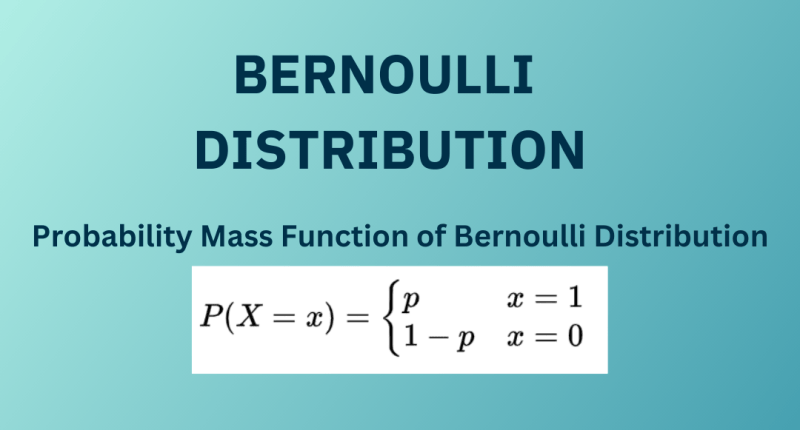
How the Bernoulli Distribution Shapes Probability Theory and Real-World Decisions
The Bernoulli distribution isn’t just a mathematical abstraction—it’s the silent architect behind every yes/no decision, every coin flip, every medical trial...
-

How a Geometric Sequence Calculator Transforms Math, Finance, and Data Science
The geometric sequence calculator isn’t just a tool—it’s a precision instrument that bridges abstract mathematics with tangible outcomes. Whether you’re...
-
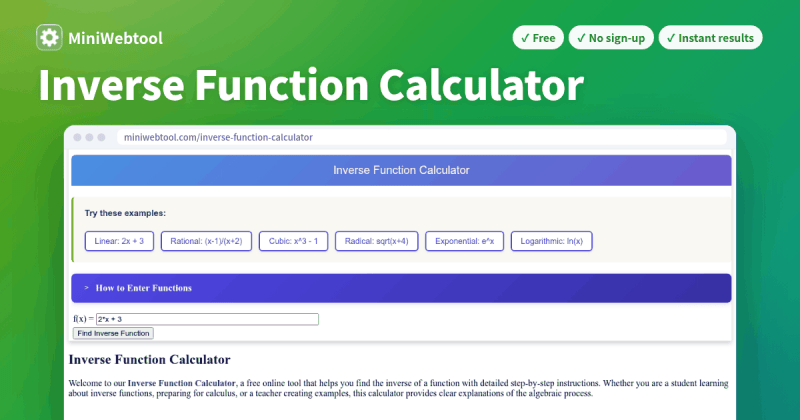
How the Inverse Functions Calculator Transforms Math, Engineering, and Data Science
Mathematics often presents problems where the relationship between variables is clear, but the direction of dependency is not. When you need to find the input...
-

How a Covariance Calculator Reveals Hidden Market Patterns
Covariance measures how two variables move together—whether stock prices rise or fall in tandem, or if economic indicators sync across regions. Yet...
-

How Functions Evolve: The Hidden Power of Transformations of Functions
At its core, the transformation of functions is a language of change. It allows mathematicians and engineers to take a known function—say, a parabola or a sine...
-

How Multiplying Matrices Transforms Linear Algebra and Real-World Problem Solving
The process isn’t merely arithmetic; it’s a structured dance of rows and columns, where each element’s contribution is a product of its neighbors’...