Tag
electron-pair-repulsion
-
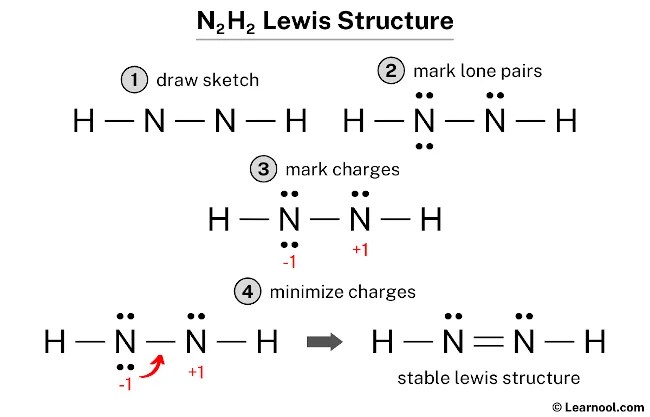
Decoding the N2H2 Lewis Structure: The Hidden Blueprint of Hydrazine’s Molecular Geometry
What makes the N2H2 lewis structure particularly fascinating is its dynamic nature. Unlike saturated hydrocarbons or even ammonia (NH3), hydrazine derivatives...
-

Decoding COCl2 Lewis Structure: The Hidden Geometry of Phosgene’s Molecular Blueprint
What makes the cocl2 lewis structure so deceptively simple yet profoundly complex? On paper, it follows VSEPR theory: four regions of electron density (two...
-

How the VSEPR Chart Decodes Molecular Geometry Like Never Before
The VSEPR chart isn’t just a tool—it’s a visual language that reveals the hidden architecture of molecules. From the symmetrical elegance of carbon dioxide to...
-

Decoding the CH2Cl2 Lewis Structure: The Hidden Geometry of Dichloromethane
When chemists first encountered CH2Cl2—a molecule now ubiquitous in laboratories and industrial processes—they didn’t immediately grasp its structural...
-

Decoding the i3- Lewis Structure: The Hidden Geometry of Triiodide’s Stability
What makes the i3- Lewis structure particularly fascinating is its deviation from the Valence Shell Electron Pair Repulsion (VSEPR) model’s predictions...
-

Decoding PF3 Lewis Structure: The Science Behind Phosphorus Trifluoride’s Molecular Geometry
The anomaly lies in phosphorus’s valence electrons. With five available electrons in its outermost shell, phosphorus in PF₃ forms three single bonds with...
-

Decoding Phosphorus Pentachloride: The Science Behind Its PCL5 Lewis Structure
The pcl5 lewis structure isn’t just a static diagram—it’s a dynamic representation of how phosphorus, a third-period element, defies the octet rule. With five...
-

Decoding the SCL2 Lewis Structure: Molecular Geometry & Bonding Secrets
The SCl₂ molecule stands as a textbook example of how valence shell electron pair repulsion (VSEPR) theory dictates molecular shape. Unlike its more...
-

Decoding the XEF2 Lewis Structure: A Molecular Blueprint Explained
The xenon difluoride molecule (XeF 2 ) stands as a cornerstone of noble gas chemistry, defying early assumptions that xenon—an inert, monatomic gas—could form...