Tag
Python performance
-
How to Concatenate Strings in Python: Mastery Beyond Basics
The elegance of concatenate strings Python lies in its balance between simplicity and power. A beginner might use the `+` operator for basic cases, while...
-

How Python String Concatenation Works: Performance, Methods, and Pitfalls
The choice between concatenation methods often hinges on context: a single operation may favor simplicity, while bulk operations demand pre-allocation or...
-
How Python’s heapq Transforms Data Efficiency
Python’s heapq module is not just another utility—it’s a precision tool for developers who demand efficiency without sacrificing readability. Unlike built-in...
-

How Python Sort List Transforms Data Handling in Modern Development
Python’s ability to sort a list with minimal code has become a cornerstone of data processing in software engineering. Whether you’re organizing datasets for...
-

How Python’s Built-in Dictionary Reshapes Data Handling
The genius of the dictionary python lies in its simplicity. A single curly brace `{}` encapsulates a system where keys map directly to values, eliminating the...
-

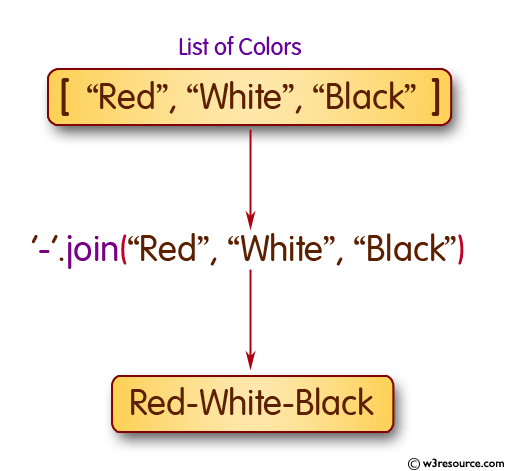
How Python Join Transforms String Manipulation—And Why It Matters
The method’s versatility extends beyond basic use cases. Imagine parsing a JSON payload where keys and values must be interleaved dynamically, or generating...
-

How to Check and Optimize the Length of List Python Like a Pro
At its core, the length of list Python is more than a numerical value—it’s a reflection of how data is stored and accessed. Lists in Python are dynamic arrays...
-

Mastering Python Range: The Silent Engine Behind Efficient Iteration
The `python range` construct isn’t just about numbers; it’s a paradigm shift in how sequences are handled. Its design minimizes memory overhead while...
-

How Python Tuples Reshape Data Handling and Performance
The distinction between tuples and lists extends beyond syntax. Tuples, with their fixed-length nature, are ideal for storing heterogeneous data where...
