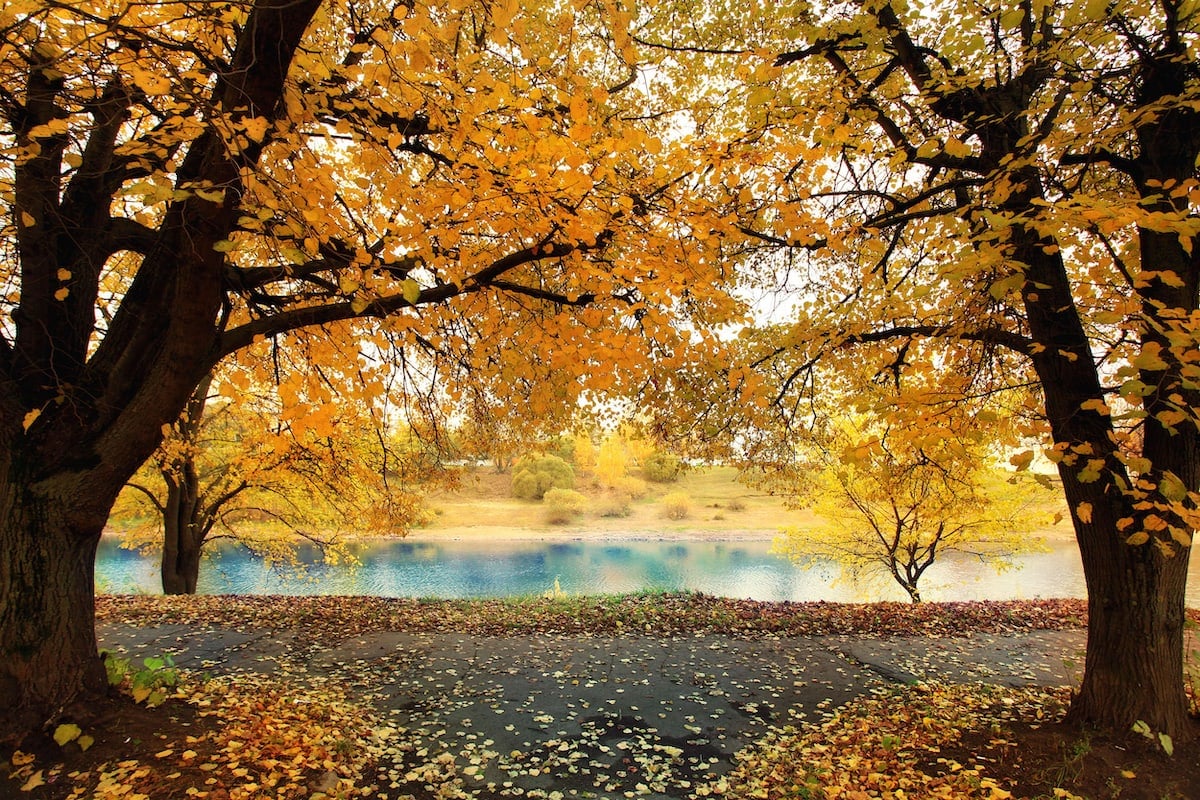
Autumn’s final warm embrace arrives unexpectedly—a meteorological paradox known as Indian Summer. Unlike typical seasonal transitions, this phenomenon defies expectations with sudden warmth, crystal-clear skies, and an eerie calm that lingers long after summer’s official end. Meteorologists trace its origins to high-pressure systems trapping heat near the Earth’s surface, creating a fleeting illusion of summer’s return. Yet, beyond its scientific intrigue lies a cultural tapestry woven through centuries of folklore, harvest festivals, and literary masterpieces that immortalize its fleeting beauty.
From the rolling hills of New England to the vineyards of Europe and the ancient forests of Asia, Indian Summer paints landscapes in golden hues while baffling weather forecasts. Its arrival—often in late September or October—brings a mix of relief and unease, as temperatures spike before winter’s inevitable grip. But what exactly triggers this climatic anomaly, and why does it captivate scientists, poets, and gardeners alike? The answer lies in a delicate interplay of atmospheric pressure, shifting jet streams, and regional geography that turns ordinary autumn days into a meteorological spectacle.
Meteorological Definition and Distinct Characteristics of Indian Summer
Indian Summer represents a unique atmospheric anomaly where warm, dry conditions re-emerge in late autumn, defying the expected seasonal cooling. Unlike typical autumn weather, this phenomenon occurs due to specific meteorological conditions, including high-pressure systems and temperature inversions, which trap warmth near the surface. Understanding its precise definition—temperature ranges, humidity levels, and atmospheric dynamics—reveals why it stands apart from regular autumn patterns.
The term Indian Summer originates from early American settlers who observed the recurrence of summer-like warmth after the initial autumn chill. Meteorologically, it is characterized by a temperature inversion, where a layer of warm air settles above a cooler air mass near the ground. This inversion, combined with anticyclonic conditions (high-pressure systems), suppresses cloud formation, leading to clear skies and reduced wind activity. Humidity levels typically drop below 40%, creating a crisp, dry atmosphere that contrasts sharply with the damp, windy autumn weather.
Temperature Inversion and Its Role in Indian Summer Formation
Temperature inversion is the defining feature of Indian Summer, where warm air overrides cooler air near the surface. This occurs when a high-pressure system settles over a region, causing air to sink and compress, increasing its temperature. Unlike normal atmospheric conditions where temperature decreases with altitude, inversions create a stable atmospheric layer that traps warmth.
During Indian Summer, surface temperatures can rebound to 15–25°C (59–77°F), depending on the region, while overnight lows may still drop to 5–10°C (41–50°F). This diurnal temperature variation—warm days and cool nights—is a hallmark of the phenomenon. The inversion also suppresses vertical air mixing, reducing cloud cover and maintaining dry conditions. In contrast, regular autumn weather experiences a gradual, consistent cooling without such abrupt temperature shifts.
Comparison Table: Indian Summer vs. Regular Autumn Weather
The following table highlights key differences between Indian Summer and standard autumn conditions, emphasizing how atmospheric and climatic factors diverge.
Northeastern U.S., Canada, Midwest U.S., parts of Europe (e.g., UK, Germany)
Global, but varies by latitude and continent
The table illustrates how Indian Summer deviates from typical autumn trends, particularly in temperature stability, humidity, and wind behavior. The phenomenon is most pronounced in regions with continental climates, where cold air masses from the north clash with lingering warm air from the south.
Role of the Jet Stream in Indian Summer Development
The polar jet stream, a high-altitude river of fast-moving air, plays a critical role in Indian Summer formation. During autumn, the jet stream typically shifts southward, allowing cold Arctic air to dominate mid-latitude regions. However, in Indian Summer events, the jet stream weakens or stagnates, creating a blocking pattern that traps warm air in place.
When a high-pressure ridge develops along the jet stream, it deflects storm systems and prevents cold air from advancing. This ridge, often referred to as an Omega block (resembling the Greek letter Ω on weather maps), forces warm air to sink and compress, reinforcing the temperature inversion. The result is a prolonged warm spell despite the seasonal progression toward winter.
Historical examples, such as the 2016 Indian Summer in the northeastern U.S., demonstrate this mechanism. In October 2016, a persistent high-pressure system over the region pushed temperatures into the mid-20s°C (77°F) while blocking cold fronts from the north. Satellite and radar data confirmed the jet stream’s stagnation, validating the meteorological explanation.
Atmospheric Conditions Supporting Indian Summer
Several atmospheric factors contribute to the persistence of Indian Summer:
- High-Pressure Systems (Anticyclones): These systems suppress cloud formation and precipitation, leading to clear skies and solar heating during the day. The subsiding air in anticyclones warms adiabatically, further elevating surface temperatures. - Radiation Fogs: While Indian Summer is dry, residual moisture near the surface can create radiation fog in the early morning, which dissipates quickly under clear skies. This fog is a secondary indicator of stable, calm conditions. - Topographic Influence: Regions with valleys or basins, such as the Great Lakes area in the U.S. or the Rhine Valley in Europe, experience more pronounced Indian Summers due to cold air pooling at night and warm air settling during the day.
"Indian Summer is not merely a warm spell but a meteorological paradox—a temporary reprieve from autumn’s advance, governed by the delicate balance of high-pressure dominance and jet stream behavior."
The interplay of these factors explains why Indian Summer is unpredictable yet recurrent in specific regions, often catching residents off guard with its sudden warmth.
Historical and Cultural Significance of Indian Summer
The term Indian Summer carries layers of historical depth and cultural resonance, transcending its meteorological definition to become a symbol of nostalgia, renewal, and fleeting warmth. Originating from early European settlers’ observations of North America, the phrase has woven itself into folklore, literature, and agricultural traditions, reflecting humanity’s enduring fascination with nature’s cyclical beauty. Over centuries, its meaning has evolved—from a practical marker of seasonal transitions to a poetic motif evoking emotion, memory, and even existential reflection. This significance is particularly pronounced in regions where seasonal shifts dictate livelihoods, art, and daily life, making Indian Summer a cultural touchstone that bridges science, tradition, and creativity.
Origins and Early Historical References
The term Indian Summer first emerged in the 17th century among European settlers in North America, who noticed an unseasonably warm period following the first autumn frosts. Early references suggest confusion between the phenomenon and the arrival of Native American tribes during hunting seasons, leading to the misconception that the warmth was tied to their presence. By the 18th and 19th centuries, the phrase became entrenched in American English, appearing in diaries, newspapers, and scientific writings. Unlike today’s meteorological precision, early descriptions were often poetic or anecdotal, blending observation with cultural interpretation.
A timeline of key historical references illustrates how the term’s perception shifted from practical necessity to artistic inspiration:
Late 17th Century (New England Colonies)
Early settlers documented "Indian-like" warmth in autumn, attributing it to the return of Native American tribes. The Massachusetts Historical Society archives from 1670 mention "a warm day in October, as if the Indians had brought summer back with them."
1778 (Benjamin Franklin’s Observations)
Franklin, in a letter to the Journal of the American Philosophical Society, noted the phenomenon but dismissed the "Indian" connection, instead describing it as a "return of summer" after early frost. His scientific curiosity laid groundwork for later meteorological study.
Early 19th Century (Romantic Literature)
Writers like James Fenimore Cooper and Washington Irving romanticized Indian Summer in novels such as The Last of the Mohicans (1826), where it symbolized both beauty and impending loss. Cooper’s description of "the soft, dreamy air of an Indian summer" became iconic, linking the season to melancholy and nostalgia.
1883 (Meteorological Formalization)
The term gained scientific traction when the Smithsonian Institution published observations distinguishing Indian Summer from general autumn warmth. By the late 1800s, it was recognized as a distinct climatic event, though regional variations (e.g., "St. Martin’s Summer" in Europe) persisted.
Mid-20th Century (Pop Culture Adoption)
Films like Autumn Crocus (1934) and songs such as "Indian Summer" by The Four Seasons (1966) cemented the term in modern lexicon, often associating it with bittersweet romance or fleeting happiness.
The evolution reflects a broader cultural shift: from survival-based observations to artistic and emotional symbolism. Today, the term endures as a bridge between empirical science and human storytelling.
Cultural Celebrations and Agricultural Traditions
In agricultural communities, Indian Summer holds practical and ceremonial significance, marking the final harvests before winter. Folklore often depicts it as a "second chance" for crops or a time when spirits of the land linger. For example, in New England, farmers historically viewed the warm spell as an opportunity to gather late-season apples, pumpkins, and grains, while in Germany, the phenomenon inspired harvest festivals like Erntedankfest, where communities thanked the earth for its bounty.
"An Indian summer is a day in autumn when the summer comes back for a visit."
— Henry Van Dyke, American Poet (1905)
The season’s ambiguity—neither summer nor winter—also fuels superstitions. In Scandinavian folklore, a warm October was believed to signal a mild winter, while in Japan, the Kōyō (red leaves) season, though not identical, shares themes of transient beauty. Agricultural calendars in regions like Canada’s Maritimes and Upstate New York often note Indian Summer as a critical period for root vegetable harvesting, such as potatoes and carrots, which require frost-free soil.
Literature, Art, and Modern Pop Culture
Indian Summer’s evocative qualities have made it a staple in art and literature, often as a metaphor for fleeting moments or unresolved emotions. 19th-century American poets like Emily Dickinson and Walt Whitman frequently referenced it in their works, using its warmth to contrast with the inevitability of winter’s arrival. Dickinson’s poem "After great pain, a formal feeling comes" (1862) subtly evokes the season’s duality:
*"The Nerves sit ceremonious, like Tombs—
The stiff Heart questions ‘was it He, that bore,’
And ‘Yesterday,’ or ‘Centuries before’?"*
— Emily Dickinson
(While not explicitly about Indian Summer, the theme of delayed grief mirrors its transient warmth.)
In visual art, painters like Winslow Homer captured the golden hues of Indian Summer in works such as The Gulf Stream (1899), though his depictions often tied the season to solitude and introspection. The Impressionists, too, embraced its light, with Claude Monet’s later works reflecting the soft, diffused glow of autumn afternoons.
Modern pop culture continues to draw on Indian Summer’s symbolism. The 1966 song "Indian Summer" by The Four Seasons captures its bittersweet romance:
*"Indian summer, you’re so sweet,
Like a dream that I can’t forget..."*
Meanwhile, films like The Bridges of Madison County (1995) use the season to frame a love story against the backdrop of rural Iowa, where Indian Summer’s warmth mirrors the characters’ emotional awakening.
In music, artists like Bob Dylan ("Autumn Leaves," 1964) and Joni Mitchell ("A Case of You," 1971) employ the season to explore themes of impermanence and longing. Even in television, shows like Gilmore Girls reference Indian Summer as a nostalgic throwback to childhood, reinforcing its association with memory and comfort.
Geographical Distribution and Best Places to Experience Indian Summer
Indian Summer extends its warm embrace across diverse global regions, each offering a distinct flavor of this meteorological phenomenon. While it is most famously associated with North America, its influence stretches across continents, from the rolling hills of Europe to the ancient landscapes of Asia. The experience varies significantly depending on location—whether in the bustling cities of the Midwest or the serene rural expanses of Scandinavia—shaped by topography, climate patterns, and human activity. Urban environments often intensify or alter the phenomenon through pollution and heat absorption, while rural areas provide a purer, more immersive encounter with nature’s seasonal transition.
Global Regions Where Indian Summer Is Prominently Observed
Indian Summer manifests in temperate regions worldwide, typically between 35° and 50° latitude, where cold fronts clash with lingering summer warmth. In the United States, it is most pronounced in the Northeast (e.g., New England, Great Lakes region) and Midwest, where crisp autumn air suddenly gives way to unseasonably warm days, often accompanied by golden foliage. Europe experiences a milder yet equally enchanting version, particularly in the United Kingdom (notably the Cotswolds and Scottish Highlands) and Scandinavia (Sweden’s Småland and Norway’s fjords), where the phenomenon is linked to the retreat of polar air masses. In Asia, Japan (especially Hokkaido and the northern Alps) and parts of China (e.g., the Yangtze River Delta) observe Indian Summer, marked by sudden warmth amid autumnal landscapes, often coinciding with harvest festivals and cultural celebrations.
The duration and intensity of Indian Summer vary by region. In the U.S. Midwest, it can last 1–3 weeks, with temperatures soaring to 20–25°C (68–77°F) after a cold snap. In contrast, Scandinavian Indian Summers are shorter—3–7 days—with temperatures hovering around 15–20°C (59–68°F). Urban areas tend to experience longer and more intense spells due to the urban heat island effect, where asphalt and concrete retain heat, while rural regions offer a cooler, more natural experience with fresher air and vibrant autumnal hues.
Top 5 Locations Worldwide to Experience Indian Summer
The following table highlights the most iconic destinations for Indian Summer, blending meteorological data with cultural and sensory richness. Each location offers a unique interplay of weather, scenery, and local traditions, making it a must-visit during this fleeting seasonal reprieve.
Region/Country
Typical Months
Average Temperature
Unique Local Characteristics
Best Activities
Northeast U.S. (New England, Great Lakes)
Late September–early November
18–24°C (64–75°F)
Vibrant maple and oak foliage turning crimson and gold.
Fresh seafood harvests (e.g., uni (sea urchin), crab).
Onsen (hot springs) with mountain views.
Skiing in Niseko (early snowfall contrasts with warmth).
Visiting Shikotsu-Toya National Park for volcanic landscapes.
Participating in sake brewing experiences in rural villages.
Småland, Sweden
Late September–early November
10–15°C (50–59°F)
Fairy-tale forests (inspiration for Asteroid B-612 in The Little Prince).
Traditional Midsommar celebrations (though earlier, the vibe lingers).
Blueberry and cloudberry picking in wild berry patches.
Exploring Grimeton Radio Station (a UNESCO-listed site).
Canoeing on Lake Vättern.
Visiting open-air museums like Skansen Kronoberg.
Yangtze River Delta, China (e.g., Suzhou, Hangzhou)
Mid-October–late November
16–22°C (61–72°F)
Ancient water towns (e.g., Zhouzhuang) with willow-lined canals.
Tea harvest festivals (e.g., Longjing tea in Hangzhou).
Lantern-lit gardens during cultural events.
Boating on the Grand Canal.
Visiting West Lake in Hangzhou for autumnal scenery.
Exploring classical Chinese gardens
Scientific Causes and Climate Change Implications of Indian Summer
Indian Summer emerges from intricate atmospheric dynamics that combine high-pressure systems, temperature inversions, and the moderating influence of large water bodies. These processes create a temporary respite of warmth in late autumn, defying the seasonal transition toward winter. Understanding the underlying mechanisms reveals not only the meteorological rarity of this phenomenon but also its vulnerability to broader climate shifts. Recent climate models and observational data suggest that Indian Summer may be undergoing subtle yet significant transformations, with implications for regional ecosystems and human activities.
The interplay of atmospheric forces during Indian Summer involves a sequence of events that trap warmth near the Earth’s surface, delaying the onset of cold weather. Subsiding air from high-pressure systems compresses and warms as it descends, while temperature inversions—where warmer air overlies cooler air—prevent vertical mixing, trapping heat. Meanwhile, large bodies of water, such as lakes or oceans, release stored heat gradually, prolonging warmth in adjacent landmasses. These factors collectively contribute to the distinctive characteristics of Indian Summer, though their balance is increasingly disrupted by climate change.
Atmospheric Mechanisms Behind Indian Summer
The formation of Indian Summer hinges on the development of high-pressure systems over North America and Eurasia, typically in late autumn. These systems, often referred to as blocking highs, stall or slow the progression of cold Arctic air masses southward. As air descends within these high-pressure zones, it undergoes adiabatic warming—a process where compression raises its temperature. This subsiding air suppresses cloud formation, allowing solar radiation to warm the surface during the day while preventing nocturnal cooling.
A critical component of this phenomenon is the temperature inversion, where a layer of warm air acts as a lid over cooler air near the ground. Normally, the atmosphere cools with altitude, but inversions reverse this gradient. During Indian Summer, inversions form due to the subsidence of warm air from aloft, trapping pollutants and moisture—and, crucially, heat—close to the surface. This inversion layer can persist for days or weeks, maintaining unseasonably warm temperatures. For example, in the northeastern United States, inversions during Indian Summer can elevate surface temperatures by 5–10°C (9–18°F) above typical autumn averages, as documented in studies by the National Oceanic and Atmospheric Administration (NOAA).
The role of large water bodies further amplifies Indian Summer’s intensity. Water has a high specific heat capacity, meaning it absorbs and releases heat slowly. During summer and early autumn, lakes and oceans accumulate heat, which they gradually radiate back into the atmosphere as temperatures drop. Regions adjacent to these bodies—such as the Great Lakes in North America or the Baltic Sea in Europe—experience prolonged warmth due to this delayed heat release. Satellite data from NASA’s Earth Observatory indicates that coastal and lakeshore areas can remain 3–7°C (5–13°F) warmer during Indian Summer compared to inland regions, even when the broader synoptic pattern suggests cooling.
Visualization of Atmospheric Processes Leading to Indian Summer
The following ASCII-based flowchart illustrates the key atmospheric interactions driving Indian Summer. For a more interactive representation, CSS-styled `` elements can be used to depict layered atmospheric processes, though text-based visualization remains accessible and informative.
+-------------------------------------+
| HIGH-PRESSURE SYSTEM |
| (Subsiding Air Warms Adiabatically) |
+----------+-------------------+
|
v
+----------+----------+
| TEMPERATURE INVERSION |
| (Warm Air Traps Heat)|
+----------+----------+
|
v
+----------+----------+----------+
| SURFACE | LARGE | RADIATIVE|
| WARMING | WATER | HEATING |
| | BODIES | (Daytime)|
+----------+----------+----------+
| |
v v
+----------+----------+ +----------+
| NOCTURNAL | | | DELAYED |
| RADIATION | | | HEAT LOSS|
| LOSS | | | FROM WATER|
| PREVENTED | | +----------+
+----------+----------+
|
v
+-------------------------------------+
| INDIAN SUMMER (Unseasonable Warmth) |
+-------------------------------------+
Key Processes:
1. High-pressure subsidence warms air aloft, creating inversions.
2. Inversions suppress vertical mixing, trapping heat near the surface.
3. Large water bodies release stored heat, prolonging warmth.
4. Reduced nocturnal cooling allows daytime heat to persist overnight.
For a dynamic visualization, the following CSS-styled `` structure could be implemented (note: actual rendering requires HTML/CSS support):
High-Pressure System
Temperature Inversion
Climate Change and the Evolution of Indian Summer
Over the past five decades, observational data and climate models indicate that Indian Summer is becoming less predictable in its timing, intensity, and geographic extent. Rising global temperatures alter the behavior of high-pressure systems, the stability of temperature inversions, and the thermal properties of water bodies. Studies published in Nature Climate Change and Journal of Climate highlight three primary trends:
1. Increased Frequency of Warm Anomalies
Climate models project that autumn warming trends will make Indian Summer-like conditions more frequent. For instance, a 2020 study by NOAA found that the likelihood of late-autumn heatwaves in the northeastern U.S. has increased by 30–50% since 1970, partially attributable to stronger high-pressure systems linked to Arctic amplification. Similarly, Europe’s Copernicus Climate Change Service reports a 40% rise in late-season warm spells since 1980, with some regions experiencing 5–10 additional days of Indian Summer conditions per decade.
2. Shifts in Timing and Duration
The timing of Indian Summer is also shifting earlier in the season. Historical records from the Midwestern U.S. show that the phenomenon now begins 5–7 days earlier on average compared to the mid-20th century. This shift is tied to earlier snowmelt and reduced autumn cooling rates, as documented in research by the University of Michigan’s Climate and Space Sciences Laboratory. In contrast, some models suggest that in northern latitudes, Indian Summer may become briefer but more intense, with rapid warming followed by abrupt cold snaps due to destabilized jet streams.
3. Regional Disparities in Climate Impact
The effects of climate change on Indian Summer are not uniform. Coastal and lakeshore regions may experience prolonged warmth due to delayed heat loss from water, while inland areas could see greater variability. For example:
Great Lakes Region (U.S./Canada): Warmer water temperatures have extended Indian Summer by 1–2 weeks, as per NASA’s Earthdata analyses.
Eastern Europe: Some areas have seen a decline in traditional Indian Summer days, replaced by erratic warm-cold cycles, according to ECMWF (European Centre for Medium-Range Weather Forecasts) data.
Southeastern U.S.: Increased humidity and moisture from the Gulf of Mexico may enhance inversion stability, leading to more frequent but shorter Indian Summer episodes.
Future Scenarios Under Climate Models
Projections from the Intergovernmental Panel on Climate Change (IPCC) and regional climate models paint varied futures for Indian Summer, depending on emission pathways. Three plausible scenarios emerge:
Practical Tips for Enjoying or Preparing for Indian Summer
Indian Summer offers a fleeting yet enchanting respite from the monotony of autumn’s chill or the intensity of summer’s heat, presenting an ideal opportunity to engage with nature, savor seasonal delights, and optimize outdoor living spaces. Whether you’re a nature enthusiast, a homeowner tending to a garden, or a family planning leisurely activities, this transitional period demands preparation to fully capitalize on its unique charm. From selecting the right attire for unpredictable weather to recognizing early signs of heat stress, practical strategies ensure safety, comfort, and enjoyment during these warm interludes.
Outdoor Activities Tailored to Indian Summer Conditions
The mild yet warm temperatures of Indian Summer create an optimal environment for outdoor pursuits that balance productivity with relaxation. Hiking in wooded trails or open meadows allows individuals to immerse themselves in the season’s vibrant foliage and lingering summer blooms, while photography enthusiasts can capture the interplay of golden sunlight casting long shadows over landscapes. Gardening remains productive during this period, as soil warmth persists, enabling late-season planting of frost-tolerant crops like kale, spinach, or garlic.
For those seeking leisurely experiences, picnics in parks or lakeside settings become particularly appealing, especially during early mornings or late afternoons when temperatures are cooler. Birdwatching also peaks during Indian Summer, as migratory species rest or feed in abundance before continuing their journeys. To maximize enjoyment, align activities with the UV index, which remains elevated despite cooler air temperatures. Applying broad-spectrum sunscreen (SPF 30 or higher), wearing wide-brimmed hats, and using UV-blocking sunglasses are essential precautions.
Seasonal Foods and Beverages for Optimal Comfort
Indian Summer’s warmth calls for lighter, hydrating, and nutrient-rich foods that refresh the palate without overheating the body. Traditional seasonal staples include spiced apple cider, infused with cinnamon and cloves, which warms the body without excess heat. Alternatively, chilled gazpacho—a Spanish cold soup made from tomatoes, cucumbers, and bell peppers—provides hydration and a burst of summer flavors. For a heartier option, roasted butternut squash soup with a swirl of coconut milk offers a comforting yet digestible meal as temperatures dip in the evenings.
Beverages should prioritize hydration, with options like hibiscus iced tea (rich in antioxidants) or ginger-lemon infusions aiding digestion and circulation. Snacks like grilled peaches with honey or chilled watermelon slices complement outdoor gatherings, while spiced nuts—such as almonds tossed in smoked paprika and cayenne—provide a satisfying crunch. For those hosting gatherings, preparing a charcuterie board with seasonal cheeses (e.g., aged Gouda or brie) and dried fruits like figs or apricots ensures a balance of textures and flavors.
Fashion and Comfort Strategies for Fluctuating Temperatures
Indian Summer’s hallmark—temperature swings—demands a versatile wardrobe that adapts to mornings that may feel autumnal and afternoons that retain summer-like warmth. Layering becomes key: opt for lightweight, long-sleeve shirts or merino wool sweaters that can be easily removed as the sun climbs. Convertible pants (with detachable legs) or vests offer flexibility for hiking or gardening, while breathable fabrics like linen or moisture-wicking synthetics prevent overheating.
Footwear should prioritize support and ventilation, such as trail-running shoes with mesh panels for hikes or slip-on loafers for casual outings. Accessories play a critical role: scarves or lightweight shawls can be draped over shoulders when breezes pick up, while fingerless gloves retain warmth without restricting dexterity. For sun protection, UPF-rated clothing or wide-brimmed hats with neck flaps shield against UV exposure, especially during midday outings.
Homeowner’s Checklist for Preparing Gardens and Lawns
Indian Summer’s lingering warmth can either invigorate or stress plants, depending on how gardeners prepare their landscapes. A structured approach ensures optimal growth while mitigating drought or pest-related damage. Below is a seasonal checklist to maintain a thriving outdoor space:
Pruning and Trimming
Remove dead or diseased branches from trees and shrubs to improve air circulation and prevent fungal growth. Prune perennials that have finished blooming (e.g., coneflowers or black-eyed Susans) to encourage next year’s growth. Avoid heavy pruning of late-season bloomers like asters, which rely on foliage for energy storage.
Soil Preparation and Mulching
Apply a 2–3 inch layer of organic mulch (e.g., shredded bark or straw) around plants to retain moisture and regulate soil temperature. Test soil moisture weekly—1 inch of water per week (including rainfall) is ideal for most gardens. For container plants, ensure drainage holes are clear and water deeply when the top inch of soil feels dry.
Pest Control and Monitoring
Indian Summer’s warmth prolongs the activity of pests like Japanese beetles, aphids, or spider mites. Introduce beneficial insects (e.g., ladybugs or lacewings) or use neem oil sprays for organic pest management. Inspect plants regularly for signs of infestation, such as yellowing leaves, sticky residue (honeydew), or chewed foliage.
Late-Season Planting and Harvesting
Sow cool-season crops like leafy greens, radishes, or carrots in well-drained soil. Harvest tomatoes, peppers, and herbs before the first frost, and preserve extras through dehydrating, canning, or freezing. For lawns, overseed bare patches with cool-season grasses (e.g., fescue) to establish roots before winter.
Equipment Maintenance
Sharpen pruners and shears to make clean cuts, reducing plant stress. Clean and oil garden tools to prevent rust, and store hoses or sprinklers in a dry place to avoid freezing. Drain and winterize irrigation systems if temperatures are expected to drop below freezing shortly after Indian Summer.
Safety Guidelines for Enjoying Indian Summer with Family and Pets
While Indian Summer’s mild conditions are ideal for outdoor activities, lingering heat and UV exposure pose risks, particularly for children, elderly individuals, and pets. Proactive measures ensure these groups remain safe and comfortable. Heat-related illnesses, such as heat exhaustion or heatstroke, can occur even in temperatures below 90°F (32°C) due to humidity and prolonged sun exposure. Symptoms include heavy sweating, nausea, dizziness, rapid pulse, and confusion—seek medical attention immediately if these arise.
To mitigate risks, schedule outdoor activities during early morning (before 10 AM) or late afternoon (after 4 PM) when UV index and temperatures are lower. Provide shaded rest areas with cooling towels or misting fans, and encourage frequent hydration—water intake should be half an ounce per pound of body weight daily, with additional fluids for active individuals. For pets, avoid asphalt surfaces (which retain heat), and ensure they have access to fresh water and shaded spots. Watch for signs of overheating in pets, such as excessive panting, lethargy, or bright red gums.
Seasonal Recipes Inspired by Indian Summer’s Flavors
Indian Summer’s culinary offerings blend warmth and refreshment, drawing from late-summer harvests and hearty autumn staples. Below are three recipes that highlight the season’s bounty, balancing comfort with lightness.
Spiced Apple Cider Glazed Ham
A festive yet approachable dish that celebrates Indian Summer’s lingering warmth with a touch of autumnal spice.Ingredients:
1 (8–10 lb) bone-in ham
2 cups apple cider
1 cup brown sugar
1/3 cup Dijon mustard
1 tsp ground cinnamon
1 tsp ground cloves
1 tsp black pepper
1 orange (zest and juice)
Preparation:
1. Preheat oven to 325°F (165°C). Place ham in a roasting pan, fat side up.
2. In a saucepan, combine apple cider, brown sugar, mustard, cinnamon, cloves, pepper, and orange zest/juice. Simmer for 10 minutes until slightly thick
Misconceptions and Debunking Myths About Indian Summer
The term Indian Summer evokes vivid imagery of warm autumn days, yet it is often misunderstood due to its name and the cultural narratives surrounding it. Many associate it exclusively with India, conflate it with other seasonal anomalies, or assume it follows predictable weather patterns. These misconceptions stem from linguistic origins, regional observations, and oversimplified explanations of meteorological phenomena. Below, common myths are dissected with scientific clarity, while comparisons to similar events—such as false spring or heat waves—highlight the distinct characteristics of Indian Summer.
Linguistic Origins and Global Occurrence of Indian Summer
The phrase Indian Summer does not originate from India but from early European settlers in North America, who observed the unseasonably warm weather during late autumn and linked it to the arrival of Native American tribes migrating southward for winter. By the 18th century, the term had entered European lexicon, describing a similar phenomenon in regions like the British Isles and continental Europe.
Myth: "Indian Summer only happens in India."
The name is purely etymological, with no meteorological basis in the Indian subcontinent. Indian Summer occurs in temperate zones globally, including:
North America: Common in the Midwest, Northeast, and Great Lakes regions.
Europe: Observed in parts of Germany, the UK, and Scandinavia.
Asia: Documented in Japan (as kōshun or late autumn warmth) and parts of China.
"The term 'Indian Summer' is a classic example of how language evolves independently of geography. Meteorologists today use it strictly as a regional descriptor for a specific weather pattern, not as a cultural or geographic identifier." — National Oceanic and Atmospheric Administration (NOAA)
Weather Patterns and the Myth of Immediate Frost
A persistent belief is that Indian Summer is invariably followed by a sharp frost, creating a false expectation of harsh winter conditions. However, this assumption ignores the variability of high-pressure systems and atmospheric conditions that influence temperature shifts.
Myth: "It’s always followed by a hard frost."
While Indian Summer often precedes winter, the transition to frost depends on:
High-pressure system longevity: Prolonged high pressure can delay frost for weeks.
Geographic location: Coastal areas experience milder transitions compared to inland regions.
Year-to-year climate variability: Some years may see multiple warm spells before winter sets in.
Historical data from the Midwestern United States shows that only 30-40% of Indian Summers are directly followed by frost within 10 days, debunking the myth of an inevitable cold snap. For example, the Indian Summer of 2016 in Ohio extended warmth into early December before a late frost arrived.
Clarifying the Role of High-Pressure Systems
Another misconception ties Indian Summer to early winter winds, suggesting cold air masses cause the warmth—a logical fallacy given the phenomenon’s definition. In reality, Indian Summer results from stagnant high-pressure systems that trap warm air near the surface.
Myth: "It’s caused by early winter winds."
The warmth arises from:
Subsiding air in high-pressure systems: Compression of air as it descends warms it adiabatically.
Clear skies and low wind speeds: Reduced cloud cover allows solar radiation to heat the ground during the day, while calm winds prevent heat loss at night.
Absence of cold fronts: Unlike wind-driven warmth (e.g., Santa Ana winds), Indian Summer lacks the dynamic forcing of air masses.
"Indian Summer is a product of atmospheric inertia, not wind direction. The misconception likely arises from observing warm winds in other contexts, such as the Santa Ana winds in California, which are distinct in their origin and behavior." — Dr. Marshall Shepherd, Atmospheric Scientist and Former President of the American Meteorological Society
Comparing Indian Summer to Similar Meteorological Phenomena
Indian Summer shares superficial similarities with other warm-weather events but differs fundamentally in timing, cause, and regional impact. Below is a comparative analysis:
Context: Understanding these distinctions is critical for accurate weather forecasting, agricultural planning, and public safety preparations.
Phenomenon
Seasonal Timing
Duration
Primary Cause
Regional Occurrence
Indian Summer
Late autumn (September–November in Northern Hemisphere)
3–10 days (rarely longer)
Stagnant high-pressure systems with clear skies and light winds
Temperate zones: North America (Great Lakes, Midwest), Europe, East Asia
False Spring
Early spring (March–April)
1–5 days
Temporary warm front or southerly wind shift
Global, particularly in mid-latitudes (e.g., UK, Pacific Northwest)
Heat Wave
Summer (June–August)
3+ days to weeks
Prolonged high-pressure systems or atmospheric blocking patterns
Global, but most severe in subtropical regions (e.g., India, Texas)
Santa Ana Winds
Late summer/early autumn (October–November)
1–3 days
Dry, downslope winds from inland deserts to coasts
Southern California, USA
Key Differences:
Indian Summer is a late-autumn event tied to high-pressure stagnation, while false spring occurs in early spring due to frontal systems.
Heat waves are summer phenomena with prolonged duration, often linked to atmospheric blocking (e.g., heat domes).
Santa Ana winds are wind-driven, creating rapid temperature spikes and low humidity, unlike the gradual warmth of Indian Summer.
Anecdotal Evidence and Expert Perspectives on Persistent Myths
Myths about Indian Summer endure due to:
Cultural storytelling: Early settlers’ narratives romanticized the term, linking it to Native American traditions without scientific basis.
Regional variability: Observers in different climates (e.g., coastal vs. inland) report contrasting experiences, fueling inconsistent perceptions.
Media oversimplification: Weather forecasts often describe Indian Summer vaguely, reinforcing misconceptions about its predictability.
"The myth that Indian Summer predicts winter severity is a classic example of pattern-seeking behavior. Humans naturally look for cause-and-effect relationships in weather, even when none exist. Climate data shows no statistical link between Indian Summer warmth and subsequent frost intensity." — Dr. Jennifer Francis, Rutgers University Climate Scientist
Case Study: In 2019, a viral social media post claimed that an Indian Summer in the UK would lead to a "beast from the East" cold snap. Meteorologists debunked this, citing no correlation between the two events. The persistence of such claims highlights how anecdotal evidence (e.g., a few years where frost followed warmth) overshadows long-term climatological data.
Indian Summer is more than a weather event—it is a fleeting intersection of science, culture, and human experience. Whether admired for its warmth or studied for its atmospheric mysteries, this phenomenon reminds us that nature’s cycles are never entirely predictable. As climate change reshapes seasonal patterns, understanding Indian Summer offers a glimpse into how our planet’s delicate balance is evolving. For those who cherish its crisp air and golden light, the challenge lies in savoring its brief return while preparing for the winters that follow—a bittersweet reminder of nature’s ever-changing rhythm.


Leave a Comment
Comments are moderated before appearing. The data you submit is processed according to the Privacy Policy of Holo.