What Is An Indian Summer Explained Through Science Culture History
Autumn’s last warm embrace arrives unexpectedly, defying forecasts with golden sunlight and unseasonable warmth—a meteorological paradox known as Indian Summer. This fleeting climatic anomaly, often romanticized in folklore and literature, disrupts the predictable march of fall, leaving scientists and weather enthusiasts alike intrigued by its origins and mechanics. Unlike typical autumn weather, Indian Summer delivers a deceptive burst of heat, sometimes lingering for days or even weeks, while leaves continue their descent. Its name, steeped in history, reflects a blend of Indigenous observations and colonial interpretations, yet the phenomenon itself transcends cultural boundaries, appearing in Europe as Altweibersommer or France’s été de la Saint-Martin.
From the Great Lakes to the European countryside, Indian Summer has shaped agricultural rhythms, inspired artistic expressions, and even influenced literary masterpieces. Meteorologists trace its roots to high-pressure systems and shifting air masses, while climatologists now examine how climate change may alter its frequency. Yet beyond the data, the season carries layers of cultural significance—whether as a harbinger of harvest festivals, a muse for poets, or a symbol of fleeting beauty in nature’s cycle. Understanding Indian Summer requires peeling back centuries of observation, science, and human storytelling to uncover why this enigmatic weather event continues to captivate.

Understanding Indian Summer: Definition and Origin

The term Indian Summer describes a distinctive meteorological phenomenon characterized by unseasonably warm, dry weather occurring during late autumn, typically between mid-September and mid-November in temperate regions. Unlike standard autumn patterns—marked by gradual cooling, increased rainfall, and leaf fall—Indian Summer features prolonged warmth, clear skies, and occasional frost at night, creating a paradoxical return to summer-like conditions. Its origins are shrouded in cultural and linguistic ambiguity, blending Indigenous observations with European settlers' interpretations, while its adoption across regions reflects both climatic realities and local folklore.
The phenomenon’s meteorological definition centers on a temporary reversal of autumnal cooling, often attributed to high-pressure systems that block cold Arctic air while allowing warm air masses to linger. This creates a "blocking pattern," where temperatures may spike to 20–30°C (68–86°F) for several days, followed by a sharp drop. Historical records indicate that Indian Summer was first documented in North America, but similar observations exist in Europe under different names, suggesting a universal climatic pattern with localized cultural interpretations.
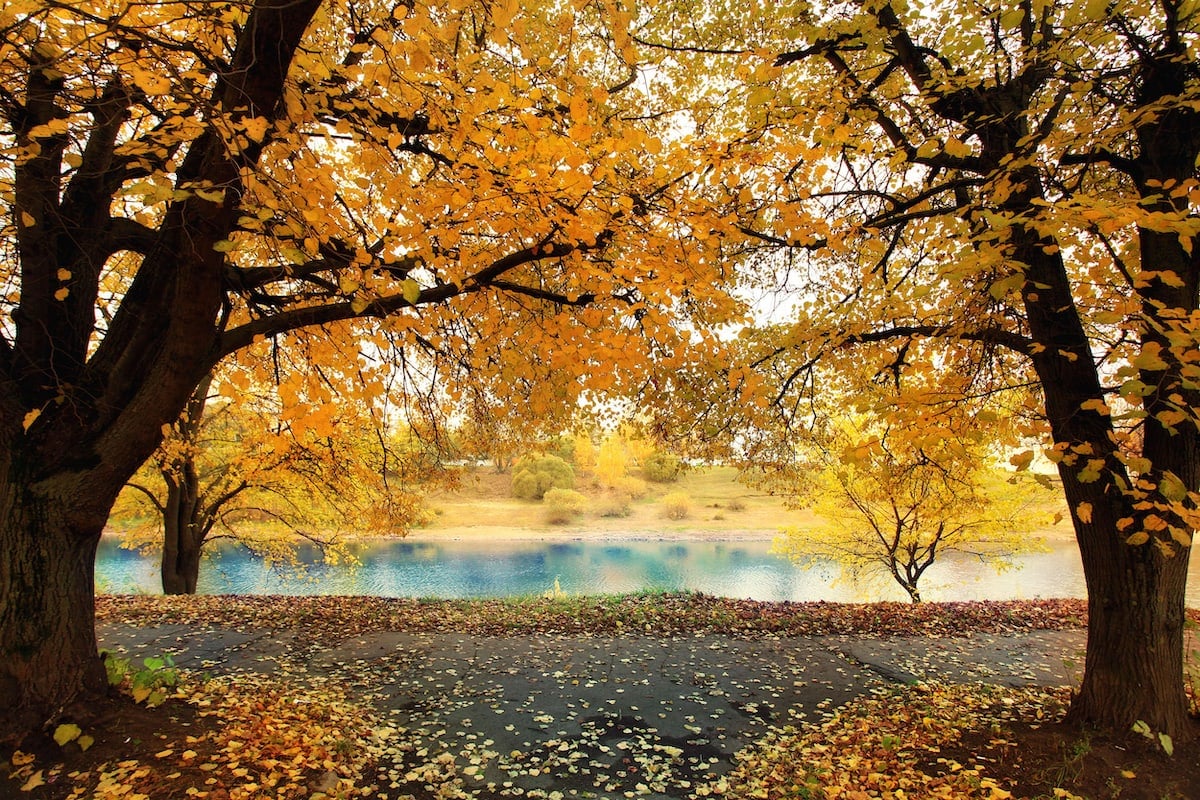
Meteorological Characteristics and Regional Variations
Indian Summer differs from typical autumn weather due to its abrupt onset, prolonged warmth, and abrupt termination. While autumn generally progresses with consistent cooling, Indian Summer disrupts this trend by introducing a false sense of summer, often accompanied by hazy skies caused by trapped pollutants or smoke. The phenomenon is most commonly observed in the northeastern United States, southeastern Canada, and parts of Europe, though its occurrence varies in intensity and duration.
A key distinction lies in its contrast with other seasonal anomalies: - False Spring: Occurs in early spring when warm temperatures and blooming plants are followed by a sudden frost, damaging crops. Unlike Indian Summer, it involves a rapid temperature shift upward before a sharp decline. - Heat Wave: Defined by prolonged excessive heat during summer, often with high humidity, whereas Indian Summer lacks humidity and occurs in autumn. - Autumn Warmth: A general term for mild autumn days without the distinct blocking pattern or cultural significance tied to Indian Summer.
Table of Contents
- Understanding Indian Summer: Definition and Origin
- Meteorological Characteristics and Regional Variations
- Historical Origins and Cultural Interpretations
- Documentation in 19th-Century Weather Journals
- Evolution of the Term Across Regions and Languages
- Meteorological Causes: Science Behind the Phenomenon
- Atmospheric Conditions Triggering Indian Summer
- Step-by-Step Interaction of Warm and Cool Air Masses
- Climate Change and Shifting Indian Summer Patterns
- Comparative Meteorological Conditions
- Regional Variations of Indian Summer: Geographic Hotspots and Cultural Nuances
- Geographic Hotspots and Frequency Patterns
- Topographic Influences: How Mountains and Valleys Shape Indian Summer
- Historical and Indigenous Predictions of Indian Summer
- Regional Nicknames and Cultural Significance
- Cultural and Historical Impact: Folklore, Literature, and Traditions
- Native American Folklore and the Spiritual Significance of Indian Summer
- Historical Accounts of Indian Summer in Settler Journals
- Literary Depictions of Indian Summer: From Dickinson to Frost
- Cultural Traditions and Agricultural Practices Linked to Indian Summer
The following table compares Indian Summer with similar phenomena across regions, highlighting their defining traits:
| Name | Region | Characteristics | Causes |
|---|---|---|---|
| Indian Summer | Northeastern U.S., Southeastern Canada, parts of Europe | Unseasonably warm, dry, hazy days (15–30°C/59–86°F) with cold nights; lasts 1–3 weeks. | High-pressure systems blocking cold fronts; warm air advection from the south. |
| False Spring | Temperate zones (e.g., Midwest U.S., Europe) | Premature warmth (10–20°C/50–68°F) followed by frost, damaging early blooms. | Temporary warm front displacement by cold air masses. |
| Heat Wave | Global (summer-dominant) | Extended periods (>3 days) of excessive heat (>35°C/95°F), often with humidity. | Stagnant high-pressure systems, urban heat islands, or climate change. |
| Autumn Warmth | General temperate regions | Mild days (15–25°C/59–77°F) without distinct cultural or meteorological markers. | Residual summer heat or weak cold fronts. |
| St. Martin’s Summer (été de la Saint-Martin) | France, Belgium, Netherlands | Warm, sunny spell around November 11 (St. Martin’s Day), often followed by winter. | Anticyclonic conditions over Europe. |
The table reveals that while Indian Summer and its European counterparts share meteorological roots, their cultural framing differs. For instance, St. Martin’s Summer in France is tied to the Catholic feast day of November 11, whereas the term Indian Summer emerged independently in North America, possibly influenced by Indigenous seasonal observations.
Historical Origins and Cultural Interpretations
The etymology of Indian Summer remains debated, with theories linking it to Native American traditions, European settlers’ observations, or a combination of both. One prominent theory suggests that early European colonists in North America noticed the warm autumn weather and associated it with the behavior of Indigenous peoples, who would hunt and prepare for winter during such periods. The term may have been coined to describe how Native Americans took advantage of the favorable conditions before the onset of cold.
Historical records from the early 19th century indicate that the phrase appeared in print as early as 1820, with references in weather journals and diaries. For example, a 1825 entry in the Boston Journal described "a warm spell in October that reminded one of summer," though the term Indian Summer itself was not yet standardized. By the 1840s, it gained traction in regional newspapers, particularly in New England, where settlers documented unseasonable warmth disrupting harvests and travel plans.
In Europe, similar phenomena were documented under different names: - Germany: Altweibersommer ("Old Women’s Summer"), linked to the harvest season and the belief that the warm days allowed elderly women to gather herbs. - France: été de la Saint-Martin, tied to the feast day of St. Martin (November 11), symbolizing a final burst of warmth before winter. - Scandinavia: Midsommaren (Mid-Summer) was sometimes repurposed to describe autumnal warmth, though this was less common.
The linguistic diversity reflects how cultures interpreted the same climatic event through their own traditions. For instance, the German term Altweibersommer carries a folkloric connotation, while the French Saint-Martin connects it to religious observances. In contrast, the North American Indian Summer emphasizes Indigenous influence, though this may be more of a colonial-era projection than a direct Indigenous term.
Documentation in 19th-Century Weather Journals
Early meteorological records from the 1800s provide concrete examples of Indian Summer events, often noting their impact on agriculture and daily life. One of the earliest documented cases occurred in 1816, a year famously known as the "Year Without a Summer" due to a volcanic eruption in Indonesia. Despite the global cooling, localized Indian Summer episodes were recorded in the northeastern U.S., where temperatures briefly rose to near-summer levels in late October.
A notable entry from 1840 in the Hartford Courant described an Indian Summer in Connecticut that lasted from October 15 to November 2, with temperatures exceeding 25°C (77°F) and clear skies. Farmers reported delayed harvests, while travelers faced challenges due to the deceptive weather. Similarly, 1869 saw an extreme Indian Summer in New York, where temperatures reached 30°C (86°F) on November 1, followed by a sudden freeze that damaged orchards.
European journals also recorded analogous events. In 1833, a French weather observer in Paris noted a warm spell around November 11, aligning with St. Martin’s Summer, while German agricultural diaries from 1850 documented Altweibersommer periods that extended herb-gathering seasons. These records demonstrate that while the term Indian Summer became prominent in North America, the phenomenon itself was universally observed and adapted to local contexts.
Evolution of the Term Across Regions and Languages
The adoption of Indian Summer in North America contrasted with Europe’s regional variations, illustrating how climate and culture shaped terminology. In the U.S., the term spread through newspapers and almanacs, becoming a fixture in weather lore by the late 19th century. By contrast, European regions retained their indigenous names, often tied to religious or agricultural cycles.
A key factor in the term’s persistence was its utility in predicting seasonal transitions. Farmers and travelers relied on Indian Summer as a signal to finalize harvests or prepare for winter. In Europe, the association with saints’ days or folklore served a similar purpose, reinforcing the phenomenon’s cultural relevance. For example, the French été de la Saint-Martin became a point of celebration, while German Altweibersommer was linked to practical tasks like gathering medicinal plants.
The following timeline highlights key historical references to Indian Summer and its equivalents in literature, diaries, and scientific reports from 1800 to 1950:
-
18
Meteorological Causes: Science Behind the Phenomenon
The term Indian Summer describes a deceptive burst of unseasonably warm weather during late autumn, often followed by the first frost. Behind this meteorological curiosity lies a complex interplay of atmospheric dynamics, high-pressure systems, and air mass interactions that defy expectations. Understanding these mechanisms reveals how subtle shifts in pressure gradients and temperature inversions can transform a crisp autumn into a fleeting taste of summer. The phenomenon is not merely a regional quirk but a product of large-scale atmospheric behavior, influenced by both natural cycles and emerging climate patterns.Atmospheric Conditions Triggering Indian Summer
Indian Summers arise from a convergence of high-pressure systems, stable air masses, and temperature inversions that trap warmth near the surface. The process begins with the development of a high-pressure system over the central or eastern United States (or equivalent regions in Europe), often accompanied by a subtropical ridge that extends northward. This ridge acts as a barrier, blocking cooler air from the Arctic or polar regions while allowing warm air from the south—originating in the Gulf of Mexico, Caribbean, or Mediterranean—to surge northward. Key atmospheric players include: - High-pressure systems: These create stable, sinking air that suppresses cloud formation, allowing sunlight to heat the ground directly. The absence of precipitation further enhances surface warming.
- Temperature inversions: Unlike typical atmospheric conditions where temperature decreases with altitude, inversions occur when a layer of warm air overlays cooler air near the surface. This inversion acts as a lid, trapping heat and preventing its dissipation.
- Air mass movements: The clash between tropical maritime air (warm and moist) and continental polar air (cold and dry) sets the stage. The warm air mass dominates temporarily, pushing the cooler air southward before retreating, leaving behind residual warmth. A critical factor is the polar jet stream, a fast-moving river of air high in the atmosphere that steers weather systems. During Indian Summers, the jet stream often retrogrades (moves westward) or weakens, allowing the high-pressure system to persist longer than usual. This stagnation enables the warm air to linger, creating the prolonged warmth characteristic of the phenomenon.
- Solar heating: Persistent sunshine over land or water bodies warms the air, increasing its buoyancy.
- Advection of warm air: Moist, warm air from the Gulf of Mexico or Mediterranean is transported northward by southerly winds. 2. Blocked Polar Air Retreat Concurrently, a cold front associated with polar air masses pushes southward but stalls due to the subtropical ridge’s resistance. The interaction creates a stationary front, where warm air overrides the cooler air without immediate displacement. This front often becomes occluded (lifted off the ground), allowing the warm air to dominate near the surface. 3. Temperature Inversion Development As the warm air settles over the cooler, denser air below, a radiation inversion forms at night. During the day, solar radiation heats the ground, but the inversion prevents the warm air from mixing upward. This creates a surface-based temperature inversion, where temperatures near the ground remain unseasonably high while upper levels cool rapidly after sunset. 4. Prolonged Warmth and Clear Skies The high-pressure system suppresses cloud formation, leading to:
- Low humidity: Dry air enhances radiative cooling at night, but the inversion traps residual heat.
- Calm winds: Light winds under high pressure reduce turbulent mixing, allowing the warm layer to persist.
- Fog formation at night: As the ground cools slightly, moisture condenses near the surface, but temperatures remain above freezing due to the inversion. 5. Sudden Termination The Indian Summer ends abruptly when the polar jet stream strengthens or shifts southward, allowing Arctic air to plunge into the region. The high-pressure system weakens, and the inversion breaks down, restoring typical autumnal conditions—often within 24–48 hours.
- Increased frequency: Regions like the U.S. Midwest and Europe are experiencing more frequent late-autumn warm spells, with some areas seeing a 20–30% rise in atypical warmth since the 1980s (NASA Goddard Institute for Space Studies).
- Extended duration: High-pressure systems are persisting longer due to slow-moving jet streams, a phenomenon linked to Arctic amplification (the rapid warming of the Arctic region).
- Intensified warmth: Surface temperatures during Indian Summers have risen by 0.5–1.5°C in some areas, exacerbated by urban heat islands and reduced albedo (reflectivity) from land-use changes. Case Study: Midwest U.S. vs. Europe A 2022 study in Journal of Climate analyzed Indian Summers in the Midwest (e.g., Ohio, Michigan) and Europe (UK, Germany) over 50 years. Key findings include:
- Midwest U.S.: Indian Summers now occur 5–7 days earlier in the season, with nights remaining 3–5°C warmer than historical averages. The Great Lakes moderate temperatures by releasing stored heat, but this effect is diminishing due to ice cover reduction.
- Europe: The UK and Germany have seen a 40% increase in late-autumn heatwaves, often linked to blocking patterns over the North Atlantic. The North Sea’s cooling influence is less pronounced than the Great Lakes’, leading to more extreme temperature swings.
- Serpent Weather (New England, U.S.) Named for the belief that snakes, emerging from hibernation, would be found coiled on warm rocks—a sign of the deceptive warmth. Early American settlers used this term to warn against premature gardening or outdoor work, as frost could return swiftly.
- Old Wives’ Summer (Europe, including Britain and Scandinavia) Derived from European folklore where rural women ("old wives") would gather herbs and dry them during these warm spells. The term underscores the agricultural reliance on such weather patterns for late harvests.
- Red Indian Summer (Germany and Austria) Linked to the reddening of beech leaves ("Rotbuchen"), a visual cue that marked the transition. The name also ties to Indigenous American associations, reflecting colonial-era linguistic blending.
- Bakuro (Japan, 紅露) Literally "red dew," this term describes the phenomenon’s association with autumnal foliage and the fleeting nature of warmth before winter’s arrival. It is often romanticized in poetry and haiku.
- False Summer (China, as "Xià Tiān" or 伏天) While not identical to Indian Summer, this term refers to a late-summer heatwave (July–August) that can extend into early autumn, confusing seasonal expectations. Some regions blur the lines between the two.
-
St. Martin’s Little Summer (Central Europe)
Tied to the feast of St. Martin of Tours (November 11), this nickname reflects Christian influences on seasonal folklore. A mild St. Martin’s day was seen as a harbinger of a
Cultural and Historical Impact: Folklore, Literature, and Traditions
Indian Summer transcends its meteorological definition, embedding itself deeply into the cultural and historical narratives of North America. Indigenous communities, settlers, and later generations of writers and artists have interpreted this fleeting climatic phenomenon as a symbol of resilience, nostalgia, and the cyclical nature of life. From oral traditions passed down through generations to literary works that immortalize its fleeting warmth, Indian Summer reflects humanity’s relationship with nature’s unpredictability. Its influence extends beyond folklore, shaping agricultural practices, seasonal rituals, and even artistic expressions that capture its ethereal beauty. The cultural significance of Indian Summer is particularly pronounced in Native American folklore, where it is often viewed as a transitional period between the vibrant energy of summer and the quiet introspection of autumn. This season serves as a bridge, a time of preparation, reflection, and sometimes, warning. For many tribes, the phenomenon carries spiritual weight, marking a moment when the natural world pauses, offering a final burst of warmth before the cold sets in. Meanwhile, European settlers documented Indian Summer in journals, framing it as both a blessing and a disruption to their daily lives. In literature, poets and writers wove its imagery into their works, using it as a metaphor for fleeting moments of joy, second chances, or the bittersweet passage of time.Native American Folklore and the Spiritual Significance of Indian Summer
Native American tribes across the continent interpreted Indian Summer through the lens of their spiritual beliefs, often associating it with renewal, caution, or the wisdom of elders. The Ojibwe people, for instance, viewed the season as a time when the spirits of the ancestors lingered, offering guidance before the long winter. According to Ojibwe oral traditions, the warm winds of Indian Summer were believed to carry the voices of the manidoog (spirits), urging hunters to prepare for the coming cold and reminding them of the balance between human needs and the gifts of the land. The Iroquois Confederacy, meanwhile, saw Indian Summer as a period of hohonwahs (thanksgiving), where tribes gathered to honor the harvest and reflect on the lessons of the past year. Elders would share stories of survival and adaptation, ensuring that younger generations understood the importance of patience and preparation. The Cherokee nation also incorporated Indian Summer into their agricultural and spiritual practices. Known as Ani Tsiskwa ("Little Summer"), this period was seen as a second chance for the earth to nourish its people. Cherokee farmers would often plant late-season crops like squash and beans, trusting that the unseasonable warmth would sustain them until the first snowfall. However, they also warned against complacency, as the sudden return of cold could signal the true onset of winter. Tribal stories often depicted animals and plants behaving erratically during Indian Summer, serving as omens for humans to heed. For example, the sight of geese migrating southward during this time was interpreted as a sign to finalize food storage and prepare shelters.Historical Accounts of Indian Summer in Settler Journals
European settlers in the 19th century frequently documented Indian Summer in their personal journals, often with a mix of awe and frustration. The phenomenon disrupted their carefully planned agricultural calendars and sometimes delayed the start of winter, extending the growing season unexpectedly. However, it also provided a temporary reprieve from the labor-intensive tasks of harvest and preservation. One notable account comes from the diary of Mary Draper Ingles, a Virginia settler who, in 1755, described an Indian Summer that allowed her family to gather additional crops despite the advancing season: > "The weather turned most strangely warm again, almost as if it were summer once more. The cornfields, which we had nearly all cut, stood as if mocking us, still green and tall. My husband said it was a sign from God, giving us one last chance to gather what we could before the snow flies. The children played in the fields as if it were June, but we all knew better—we doubled our efforts, filling every barrel with apples and every sack with grain." Such accounts highlight the duality of Indian Summer: a season that could either prolong life’s possibilities or lull communities into a false sense of security. Settlers often used the term to explain unexpected delays in migration or the postponement of winter preparations. For example, in the Midwest, farmers would delay the planting of winter wheat, only to find themselves scrambling when the cold returned abruptly. The phenomenon also influenced social gatherings; neighbors would host impromptu harvest festivals or hunting parties, knowing that the warm spell might be their last opportunity to enjoy the outdoors before winter’s grip tightened.Literary Depictions of Indian Summer: From Dickinson to Frost
Poets and writers have long been captivated by the paradoxical nature of Indian Summer, using it as a literary device to explore themes of transience, nostalgia, and the beauty found in impermanence. Emily Dickinson, known for her introspective and often melancholic verse, referenced Indian Summer in a way that underscored its fleeting, almost ghostly quality. In her poem "After great pain, a formal feeling comes" (1862), she draws a parallel between emotional numbness and the eerie calm of an Indian Summer landscape: > "The Nerves sit ceremonious, like Tombs— > The stiff Heart questions ‘twere best > That it were stone, > Impenetrable to Frost— > Impenetrable to Hope— > > The Bolts—the Climbers—all asleep— > The Woods—surround— > A Quiet—Embarrass— > That Nature—seems afraid > To breathe— > And Time—steps soft— > As if on Tip-toe— > And goes away—" While not explicitly about Indian Summer, Dickinson’s imagery of a stilled, almost funerary landscape resonates with the season’s uncanny warmth in the heart of autumn. The "formal feeling" she describes mirrors the stillness of an Indian Summer day, where the world holds its breath before the inevitable return of winter. Robert Frost, whose poetry often engaged with New England’s rural landscapes, directly evoked Indian Summer in "Indian Summer" (1913), where he contrasts the season’s deceptive warmth with the approaching cold: > "O hush thee, my soul, this day of grace! > For summer lingers, golden, in the trees, > Yet in my heart I hear the wind that passes, > And the dead voices singing of the snow. > And lo, the fields are flashing into flame, > The leaves are whirling wild in mad delight, > And through the air there comes a hollow moan > Of winds foretelling winter’s coming soon." Frost’s poem captures the tension between pleasure and foreboding, a hallmark of Indian Summer’s cultural perception. The "golden" linger of summer is juxtaposed with the "dead voices" of winter, creating a sense of inevitability. This duality also appears in the works of Mark Twain, who, in Life on the Mississippi (1883), described Indian Summer as a season that "makes a man feel like a boy again, and sets him to wondering if winter will ever come." Twain’s playful yet reflective tone highlights how settlers and later Americans viewed Indian Summer as a moment of temporary escape from the harsh realities of life.Cultural Traditions and Agricultural Practices Linked to Indian Summer
Indian Summer has historically influenced a variety of cultural traditions, particularly those tied to harvest, hunting, and community gatherings. The season’s unpredictable warmth often dictated the timing of these events, leading to unique regional adaptations. Below is a table summarizing key traditions associated with Indian Summer across different regions of North America:Tradition Region Description Modern Adaptations Late Harvest Festivals Northeastern U.S. (e.g., New England, Upstate New York) Communities held impromptu festivals to celebrate unexpected harvests or to prepare for winter. Often included apple cider presses, corn husking bees, and communal feasts. Modern "Harvest Dinners" or "Thanksgiving-like" events in October/November, sometimes timed to coincide with unseasonable warmth. Second Planting Cycles Midwestern U.S. (e.g., Iowa, Illinois, Missouri) Farmers took advantage of Indian Summer to plant late-season crops like winter wheat, turnips, or hardy greens, extending the growing season. Organic farms and community gardens now use "fall planting guides" to educate on delayed harvest techniques, often referencing historical practices. Hunting Seasons and "Rut" Traditions Indian Summer stands as a testament to nature’s unpredictability, where science meets folklore in a dance of warm air and cultural legend. From its documented appearances in 19th-century diaries to its modern-day relevance in climate studies, the phenomenon bridges meteorology and human experience. Whether viewed through the lens of a farmer’s delayed harvest, a poet’s nostalgic verses, or a climatologist’s data trends, Indian Summer reminds us that even in the most studied of systems, mystery lingers. As seasons shift under the influence of climate change, one question remains: Will this golden interlude of autumn grow rarer—or evolve into something entirely new, reshaping how we perceive the end of summer forever?
Step-by-Step Interaction of Warm and Cool Air Masses
The sequence of events leading to an Indian Summer can be broken down into distinct stages: 1. Formation of the Subtropical Ridge A high-pressure system develops over the subtropical regions (e.g., the southeastern U.S. or southern Europe), typically between 25°N and 35°N latitude. This ridge strengthens due to:"The jet stream’s behavior during Indian Summers is akin to a traffic jam in the atmosphere. When it weakens or retrogrades, it allows warm, subtropical air to pool over mid-latitude regions, creating a temporary heat dome. This stagnation is critical—without it, the warm air would simply advect eastward without lingering." — Dr. Deke Arndt, Chief of the Climate Monitoring Branch, NOAA National Centers for Environmental Information
Climate Change and Shifting Indian Summer Patterns
Emerging data suggests climate change is altering the frequency, duration, and intensity of Indian Summers. Studies indicate:Comparative Meteorological Conditions
The following table contrasts the meteorological factors driving Indian Summers in the Midwest U.S., UK, and Germany, highlighting regional differences:| Factor | Midwest U.S. | UK | Germany | Key Differences | ||||||||||||||||||
|---|---|---|---|---|---|---|---|---|---|---|---|---|---|---|---|---|---|---|---|---|---|---|
| Dominant High-Pressure System | Subtropical ridge over the southeastern U.S., often linked to the Bermuda High. | Azores High extending northeastward, interacting with Scandinavian blocking. | European High or Scandinavian Blocking, influenced by the Azores High. | The U.S. relies more on Gulf-derived moisture, while Europe depends on Mediterranean or Atlantic sources. | ||||||||||||||||||
| Air Mass Origins | Tropical maritime (Gulf of Mexico) overriding continental polar air. | Mediterranean or subtropical Atlantic air clashing with Arctic maritime air. | Subtropical air from the Mediterranean or North Africa meeting polar continental air. | European Indian Summers often involve more moisture from the Mediterranean, increasing fog and low clouds. | ||||||||||||||||||
| Role of Large Water Bodies | Great Lakes release stored heat, delaying overnight cooling by 2–4°C. | North Sea cools air slightly but contributes to marine layer fog. | Baltic Sea and North Sea moderate temperatures but less effectively than the Great Lakes. | The Great Lakes have a stronger moderating effect due to their size and depth. | ||||||||||||||||||
| Jet Stream Behavior | Weakened or retrograding polar jet stream, allowing ridge persistence. | Split jet stream with a northern branch over Scandinavia and a southern branch over southern Europe. | Blocking high over Greenland or Scandinavia forces the jet stream southward. | European patterns are more influenced by Arctic Oscillation phases than U.S. systems. | ||||||||||||||||||
| Typical Duration | 3–7 days, with temperatures 10–15°C above average. | 5–10 days,
Regional Variations of Indian Summer: Geographic Hotspots and Cultural NuancesIndian Summer manifests as a distinct meteorological and cultural phenomenon across diverse climates, with its occurrence tied to seasonal transitions, geographic features, and even human settlement patterns. While its defining characteristics—a warm, dry spell following early autumn frost—remain consistent, regional variations reveal how topography, urbanization, and historical observations shape its frequency, intensity, and local significance. From the frost-kissed valleys of the Appalachians to the dense urban sprawls of Tokyo, each area interprets Indian Summer through unique lenses, blending scientific precision with centuries-old folklore. The phenomenon’s geographic distribution is not uniform; it thrives in temperate zones where cold air masses from the north or polar regions clash with lingering warmth. Coastal areas, high-altitude regions, and continental interiors experience it differently, often influenced by proximity to large water bodies or mountain ranges that act as barriers or conduits for warm air. Below, an exploration of regional hotspots, historical anecdotes, and cultural adaptations illustrates how Indian Summer transcends meteorology to become a part of local identity.Geographic Hotspots and Frequency PatternsIndian Summer predominantly occurs in mid-latitude regions where autumn transitions are abrupt, creating ideal conditions for a delayed warmth surge. The following table summarizes key regions, their peak months, frequency, and notable locations, based on historical climate data and meteorological records.
Topographic Influences: How Mountains and Valleys Shape Indian SummerElevation and terrain play critical roles in determining where and how intensely Indian Summer occurs. Mountain ranges act as barriers, funneling warm air into valleys or amplifying temperature inversions, while coastal areas may experience modified effects due to sea breezes. In the Appalachian Mountains, for example, the phenomenon is pronounced in sheltered valleys where cold air pools at night, creating frost, while daytime temperatures soar due to compressed warm air descending from higher elevations. The Great Smoky Mountains region often records Indian Summers with temperatures exceeding 27°C (80°F) after early frosts, a pattern documented in 19th-century weather logs from Cherokee settlements. Similarly, the Alps in Europe experience localized Indian Summers in alpine valleys, where warm, dry Föhn winds descend, causing rapid temperature spikes. Historical records from Swiss meteorologists note that Zurich’s autumn temperatures can rise by 10°C (18°F) within 24 hours during such events, disrupting harvest timelines. Conversely, coastal cities like Tokyo or London mitigate extreme temperature swings due to maritime influence. However, inland areas such as the Kanto Plain in Japan or the English Midlands still exhibit classic Indian Summer traits, with dry, hazy conditions persisting for weeks. Urbanization further complicates these patterns, as heat islands in cities like Chicago or Tokyo can prolong warmth, masking the natural onset of winter.Historical and Indigenous Predictions of Indian SummerLong before meteorological instruments, Indigenous and rural communities developed intricate methods to predict Indian Summer using natural signs. These observations often aligned with ecological cycles and were passed down through generations. In North America, the Lakota Sioux tracked the behavior of geese and the ripening of sumac berries as indicators of approaching warmth. The Cherokee noted that when the dogwood trees bloomed a second time in autumn, an Indian Summer was likely. European settlers adopted similar cues, such as the return of dragonflies or the thickening of spider webs, which signaled stable, warm conditions. In Europe, farmers relied on the "St. Martin’s Summer" (November 11) as a benchmark, believing that if the day was mild, winter would be lenient. The phrase "Old Wives’ Summer" originated from rural women who used the phenomenon to dry herbs and harvest late crops. Meanwhile, in Japan, the Kanji character for Indian Summer ("Kōshun" or 紅葉順) was linked to the timing of maple leaf reddening, with folklore suggesting that delayed foliage changes foretold a late warmth surge. These predictions were not merely superstitions but reflected deep ecological knowledge. For instance, the Iroquois Confederacy correlated Indian Summer with the migration patterns of monarch butterflies, which often extended their southern journey during warm spells. Such observations remain relevant today, as modern climate models increasingly integrate traditional ecological knowledge to refine seasonal forecasts.Regional Nicknames and Cultural SignificanceIndian Summer’s cultural footprint is evident in the myriad nicknames assigned to it across regions, each reflecting local climate perceptions and historical contexts. Below is a comparative list of regional terms and their significance: |
Leave a Comment
Comments are moderated before appearing. The data you submit is processed according to the Privacy Policy of Holo.