What Is Srs Surgery Explained Clearly For Patients
Published
Sex Reassignment Surgery or SRS remains one of the most transformative yet misunderstood medical procedures in modern healthcare. For transgender individuals, this surgery is not merely a medical intervention but a critical step toward aligning physical appearance with gender identity. Misconceptions persist, often fueled by outdated stereotypes or lack of accurate information, obscuring the life-changing impact it holds for countless patients worldwide. Beyond the technical aspects, SRS represents a deeply personal journey—one that requires rigorous medical, psychological, and ethical frameworks to ensure safety and success.
Historically, SRS has evolved from experimental practices in the early 20th century to today’s evidence-based, patient-centered approach. Advances in surgical techniques, anesthesia, and post-operative care have drastically improved outcomes, reducing risks while enhancing physical and emotional well-being. Yet, the path to surgery involves stringent eligibility criteria, thorough psychological evaluations, and informed decision-making—a process designed to prioritize both medical safety and individual autonomy. This surgery is more than a procedure; it is a milestone in gender-affirming care that empowers individuals to live authentically.
Understanding SRS Surgery: Core Concepts and Definitions
Sex Reassignment Surgery (SRS), now more widely recognized as gender-affirming surgery (GAS), represents a pivotal intersection of medical science, gender identity, and ethical healthcare practices. Initially emerging in the early 20th century, SRS evolved from experimental procedures rooted in psychological and surgical innovations to a standardized, evidence-based component of transgender healthcare. The term "SRS" itself is often misunderstood, frequently conflated with cosmetic or elective procedures rather than medically necessary interventions aligned with gender dysphoria treatment. This section clarifies the medical, historical, and ethical dimensions of SRS, emphasizing its role in affirming gender identity through surgical and medical modalities.
Medical Definition and Evolution of SRS
The acronym SRS stands for Sex Reassignment Surgery, a collective term for surgical procedures designed to transition an individual’s physical characteristics to align with their gender identity. Modern terminology increasingly favors gender-affirming surgery (GAS), reflecting a shift toward patient-centered care and the recognition that gender identity is a spectrum, not a binary construct. Historically, SRS was framed within the context of gender dysphoria, a diagnosis in the Diagnostic and Statistical Manual of Mental Disorders (DSM-5) that describes distress arising from a mismatch between assigned sex and gender identity. However, contemporary approaches prioritize affirmative care, where surgery is one component of a broader healthcare strategy that may include hormonal therapy, mental health support, and social transitioning.
The origins of SRS trace back to 1930s Germany, where Magnus Hirschfeld, a pioneer in sexology, performed early genital reconstruction procedures. These experiments were met with skepticism and ethical concerns, particularly regarding consent and psychological readiness. By the 1950s–1960s, Dr. Christian Hamburger and Dr. Georges Burou advanced vaginal reconstruction techniques, while Dr. Harold Gillies contributed to penile inversion methods. The 1970s–1980s marked a turning point with the establishment of gender clinics (e.g., Stanford University’s Gender Identity Clinic) and the development of phalloplasty and vaginoplasty as more refined procedures. Ethical frameworks, such as the Harry Benjamin Standards of Care (1979), introduced structured protocols for evaluating candidates, including psychological assessments and real-life experience requirements.
Primary Objectives of SRS and Its Role in Gender-Affirming Care
The core objectives of SRS are multidimensional, addressing physical, psychological, and social well-being for transgender and gender-diverse individuals. Medically, these objectives include:
Anatomical Alignment: Restructuring primary and secondary sexual characteristics to reduce gender dysphoria, such as genital reconstruction (vaginoplasty or phalloplasty), mastectomy (for trans women), or chest masculinization (for trans men).
Functional Restoration: Ensuring surgical outcomes support urinary, sexual, and reproductive functions, where applicable (e.g., neovaginal dilation post-vaginoplasty or erectile function post-phalloplasty).
Psychosocial Affirmation: Facilitating congruence between physical appearance and gender identity, thereby improving mental health outcomes, reducing depression/anxiety, and enhancing quality of life.
Holistic Healthcare Integration: SRS is not performed in isolation but as part of a gender-affirming care continuum, which may include hormone therapy, voice training, and social support systems.
From a patient-centered perspective, SRS is often described as a transformative act of self-determination. For many, the procedure alleviates distress tied to bodily incongruence, fostering greater autonomy and social integration. Studies published in The Journal of Sexual Medicine and Lancet underscore that access to gender-affirming surgeries correlates with reduced suicide ideation and improved life satisfaction. However, disparities in access—due to geographic, financial, or systemic barriers—highlight the need for equitable healthcare policies.
Chronological Milestones in the Development of SRS
The evolution of SRS reflects advancements in surgical techniques, medical ethics, and societal attitudes. Below is a decade-by-decade breakdown of key milestones:
1930s–1940s: Experimental procedures by Magnus Hirschfeld and Dora Richter, focusing on genital reconstruction. Limited success due to lack of antibiotics and anesthesia innovations.
1950s–1960s:
1952: First documented vaginoplasty by Dr. Georges Burou in Casablanca, Morocco, using penile inversion.
1960s: Introduction of orchiectomy (testicle removal) and mastectomy procedures, alongside early hormonal therapies.
1970s–1980s:
1979: Publication of the Harry Benjamin Standards of Care, establishing ethical guidelines for gender transition, including psychological evaluations.
1980s: Development of metoidioplasty (clitoral release for phallus construction) and refinements in vaginoplasty using skin grafts.
1990s–2000s:
1990s: Rise of phalloplasty techniques using radial forearm or anterolateral thigh flaps, improving erectile function outcomes.
2002: World Professional Association for Transgender Health (WPATH) publishes the Standards of Care (SOC), updating criteria for gender-affirming treatments.
2000s: Growth of facial feminization surgery (FFS) and voice therapy as integral components of gender affirmation.
2010s–Present:
2011: WPATH SOC Version 7 emphasizes informed consent models, reducing mandatory psychological barriers for access.
2015: FDA approval of testosterone and estrogen therapies for gender transition, expanding hormonal options.
2020s: Advances in 3D-printed implants, robotic-assisted surgeries, and telemedicine consultations for preoperative evaluations, particularly in underserved regions.
Comparative Terminology: Clarifying SRS and Related Concepts
Misconceptions about SRS often stem from terminological ambiguities or outdated narratives. The table below distinguishes key terms, debunks common myths, and outlines medical realities based on WPATH guidelines and peer-reviewed literature:
Term
Definition
Common Misconception
Medical Reality
SRS (Sex Reassignment Surgery)
Historical term for surgical procedures altering primary/secondary sexual characteristics to align with gender identity. Now largely replaced by gender-affirming surgery (GAS).
Often perceived as a "quick fix" or elective cosmetic surgery, implying frivolity or lack of medical necessity.
Classified as medically necessary for individuals with gender dysphoria, following rigorous preoperative evaluations (e.g., mental health assessments, hormone therapy trials). Covered by many insurance providers under DSM-5 criteria.
Gender Reassignment
Broad term encompassing social, medical, and surgical transitions to affirm gender identity. Includes hormone therapy, name/pronoun changes, and surgeries.
Assumed to be irreversible or uniformly successful, ignoring the spectrum of patient experiences and outcomes.
Process is gradual and personalized; reversibility depends on the procedure (e.g., mastectomy is often irreversible, while vaginoplasty outcomes can vary based on post-op care). Not all individuals pursue surgery—many achieve affirmation through non-surgical means.
Facial Feminization Surgery (FFS)
Surgical modifications to facial bone structure, soft tissue, and hairline to achieve feminized or masculinized features. Includes procedures like rhinoplasty, cheekbone contouring, and forehead reconstruction.
Viewed as purely cosmetic, with no medical justification, or associated with "vanity" rather than dysphoria relief.
Recognized as medically necessary for transgender women experiencing facial dysphoria. Studies in Plastic and Reconstructive Surgery demonstrate significant improvements in social comfort and mental health post-FFS.
Patient Testimonials: Narratives of Transformation
Medical Procedures and Techniques in Sex Reassignment Surgery (SRS)
Sex Reassignment Surgery (SRS), also referred to as gender-affirming surgery, encompasses a range of specialized surgical interventions tailored to align an individual’s physical anatomy with their gender identity. These procedures are categorized into two primary groups—masculine-to-female (MTF) and female-to-male (FTM)—each involving distinct surgical techniques, anatomical modifications, and post-operative care protocols. Advances in medical technology and reconstructive surgery have expanded the precision and outcomes of these procedures, enabling greater patient satisfaction and functional restoration. Below, the specific surgical techniques under each category are explored, alongside detailed procedural workflows, comparative analyses of phalloplasty methods, and a structured decision-making framework for patients.
Primary Surgical Categories in SRS: MTF and FTM Procedures
The distinction between MTF and FTM surgeries lies in the anatomical goals, tissue manipulation, and reconstructive techniques employed. MTF procedures typically focus on vulva and breast creation, while FTM surgeries prioritize phallus, scrotum, and chest reconstruction. Each category includes multiple specialized surgeries, often performed in stages, to achieve optimal aesthetic and functional results.
MTF Surgical Procedures:
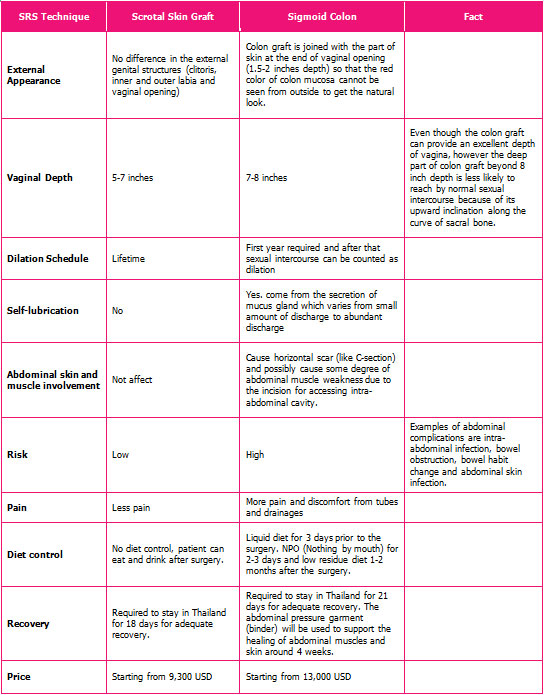
Vaginoplasty: Creation of a vaginal canal using penile and scrotal tissue inversion.
Vulvoplasty: Reconstruction of labia majora, labia minora, and clitoral hood from penile and scrotal skin.
Orchiectomy: Removal of testicular tissue to eliminate endogenous testosterone production.
Breast Augmentation/Mastopexy: Breast augmentation with implants or fat transfer, combined with mastopexy (breast lift) for contouring.
Hysterectomy and Salpingo-Oophorectomy (optional): Removal of uterine and ovarian tissue, typically considered for individuals who have not undergone menopause.
FTM Surgical Procedures:
Phalloplasty: Construction of a neophallus using skin grafts (e.g., radial forearm, anterolateral thigh).
Scrotoplasty: Creation of a scrotum from thigh or abdominal tissue, often combined with testicular implants.
Metoidioplasty: Lengthening and exposure of the clitoris to resemble a penis, with optional urethral lengthening.
Chest Mastectomy (Top Surgery): Removal of breast tissue to create a masculine chest contour.
Urethroplasty: Extension of the urethra to enable standing urination, often performed concurrently with phalloplasty.
Key Consideration:
"The selection of procedures is highly individualized, influenced by factors such as patient anatomy, hormonal therapy history, functional requirements, and personal aesthetic preferences."
Step-by-Step Surgical Process for Vaginoplasty
Vaginoplasty is the most common MTF procedure, involving the inversion of penile and scrotal tissue to form a vaginal canal, complete with lubrication and sensation. The process is meticulously planned to ensure depth, width, and functional integrity. Below is a structured breakdown of the procedure:
Pre-Operative Preparations:
Hormonal Therapy: Patients typically undergo 12–24 months of estrogen therapy to induce feminization, including fat redistribution and skin softening.
Psychological Evaluation: Mandatory assessment by a mental health professional to confirm gender dysphoria diagnosis and readiness for surgery.
Pre-Surgical Consultations: Discussion of surgical goals, anesthesia risks, and post-operative expectations with the surgical team.
Medical Screening: Evaluation of overall health, including blood tests, ECG, and infectious disease screening.
Smoking Cessation: Required 4–6 weeks pre-surgery to minimize complications like wound healing delays.
Antibiotics and Anticoagulants: Prophylactic antibiotics administered pre-operatively; anticoagulants may be adjusted or suspended based on surgical risk.
Anesthesia Types:
General Anesthesia: Standard for vaginoplasty due to the procedure’s duration (typically 2–4 hours) and invasiveness.
Regional Anesthesia (Epidural/Spinal): Occasionally used for post-operative pain management but rarely as the primary anesthetic.
Monitored Anesthesia Care (MAC): Rarely employed for vaginoplasty due to the complexity of the surgery.
Surgical Process:
Incision and Tissue Mobilization:
A perineal incision is made to access the underlying penile and scrotal tissue.
The penis is detached from the pubic bone, and the urethra is separated from the corpora cavernosa.
Scrotal skin is preserved for use in vaginal lining or vulvar reconstruction.
Vaginal Canal Creation:
The penile skin and urethra are inverted to form the vaginal canal, with the spongiosum tissue (erectile tissue of the penis) contributing to the vaginal walls.
A depth of 7–9 cm is typically achieved, with adjustments made based on patient anatomy and comfort.
Neoclitoral Hood Construction:
A portion of the penile skin is reserved to create the clitoral hood, preserving sensation.
The glans of the penis may be used to form the clitoris, with nerve endings preserved for sensitivity.
Vulvar Reconstruction:
Labia majora and minora are sculpted from scrotal skin and penile tissue, with fat grafts added for fullness if needed.
Symmetry and natural appearance are prioritized in this stage.
Post-Operative Care:
Immediate Recovery (First 24–48 Hours):
Patients are monitored in a post-anesthesia care unit (PACU) for vital signs and pain management.
Catheterization is maintained for 1–2 weeks to prevent vaginal strictures.
Ice packs applied to reduce swelling; stitches or staples removed after 7–10 days.
Short-Term Recovery (Weeks 1–6):
Dilator use begins 4–6 weeks post-surgery, gradually increasing depth to prevent vaginal narrowing.
Physical therapy may be recommended to improve pelvic floor strength and reduce discomfort.
Avoidance of sexual activity for 6–12 weeks; strenuous activities restricted for 4–6 weeks.
Long-Term Recovery (Months 3–12):
Full healing of vaginal tissue occurs around 3–6 months, with continued dilator use as needed.
Follow-up appointments monitor for complications such as vaginal stenosis, infection, or nerve-related numbness.
Hormone therapy adjustments may be made to optimize feminization effects.
Comparative Analysis of Phalloplasty Techniques
Phalloplasty, the cornerstone of FTM genital reconstruction, involves constructing a neophallus using autogenous tissue grafts. The choice of donor site significantly impacts aesthetics, functionality, and recovery. Below is a comparative analysis of the most common phalloplasty techniques, presented in a structured table for clarity:
Technique
Pros
Cons
Recovery Timeline
Radial Forearm Flap
Thin, pliable skin with minimal hair growth, ideal for neophallus aesthetics.
Long, straight shape allows for natural circumcision and urethral placement.
Well-vascularized tissue reduces risk of necrosis compared to other flaps.
Established technique with high success rates and extensive surgical literature.
Donor site morbidity: Visible scar on forearm; potential for limited grip strength or numbness.
Two-stage surgery: Requires microvascular anastomosis (connecting blood vessels) and later urethroplasty.
Hair growth: Possible if donor site includes hair follicles.
Limited length: Typically achieves 6–8 inches of erectile tissue, depending on patient anatomy.
Initial hospitalization: 5–7 days for flap survival monitoring.
Full flap integration: 3–6 months before final sculpting.
Urethral reconstruction: Additional 6–12 months if performed in a second stage.
Return to work: 4–8 weeks post-surgery, depending on physical demands.
Eligibility, Screening, and Pre-Surgical Requirements in Sex Reassignment Surgery (SRS)
Sex reassignment surgery (SRS), also known as gender-affirming surgery, represents a critical step in the transition process for many transgender and gender-diverse individuals. However, accessing SRS is not a straightforward process—it involves rigorous eligibility criteria, extensive psychological evaluations, and adherence to medical and ethical standards. The pre-surgical phase ensures that candidates are well-prepared physically, mentally, and socially, minimizing risks and maximizing the likelihood of a successful surgical outcome. This section explores the essential criteria for eligibility, the role of mental health professionals, real-world screening scenarios, and cultural considerations that shape the decision-making process.
Essential Criteria for SRS Eligibility
Eligibility for SRS is determined by a combination of medical, psychological, and legal requirements designed to safeguard patient well-being. These criteria vary slightly across regions and healthcare providers but generally include psychological evaluations, hormone therapy duration, legal documentation, and informed consent. Below are the core prerequisites structured for clarity:
Diagnosis of Gender Dysphoria
Candidates must receive a formal diagnosis of gender dysphoria (or its equivalent, such as gender incongruence) from a qualified mental health professional, typically a psychiatrist, psychologist, or gender specialist. This diagnosis aligns with classifications in the DSM-5 (Diagnostic and Statistical Manual of Mental Disorders, 5th Edition) or ICD-11 (International Classification of Diseases, 11th Revision). The evaluation confirms persistent discomfort or distress arising from a mismatch between assigned sex and gender identity.
Duration of Hormone Therapy (HRT)
Most healthcare protocols require candidates to undergo real-life experience (RLE) with hormone therapy for 12 to 24 months before surgery. This period allows individuals to explore gender expression, assess physical and emotional responses to hormones, and demonstrate stability in their gender identity. Exceptions may apply for minors or individuals under specific circumstances, but these are rare and closely monitored.
Psychological and Social Stability
Mental health professionals assess coping mechanisms, social support systems, and life stability. Candidates must demonstrate an ability to navigate challenges related to transition, including potential workplace or familial conflicts. A history of severe mental health conditions (e.g., untreated psychosis, active substance abuse) may delay or disqualify eligibility unless adequately addressed in therapy.
Legal and Ethical Consent
Informed consent is mandatory, involving comprehensive discussions about surgical risks, benefits, limitations, and alternatives. Legal requirements may include name/gender marker changes on official documents, though these are not universal. Some jurisdictions mandate court-ordered evaluations or additional legal steps to ensure voluntary and informed decision-making.
Age and Minor Considerations
For minors, SRS is typically not recommended due to physical, cognitive, and emotional developmental factors. However, some countries permit staged surgical interventions (e.g., breast binding, puberty blockers) under strict parental and medical supervision. Adult candidates must generally be 18 years or older, though age thresholds may vary.
The primary goal of eligibility criteria is to mitigate risks while ensuring SRS aligns with the individual’s long-term well-being. Rigorous screening reduces regret rates and improves surgical outcomes, though debates persist about the balance between access and safeguards.
Role of Mental Health Professionals in Pre-Surgical Assessment
Mental health professionals, including psychiatrists, psychologists, and gender therapists, play a pivotal role in evaluating candidates for SRS. Their assessments focus on gender dysphoria severity, psychological resilience, and social integration. The process typically involves:
Clinical Interviews
Professionals conduct in-depth interviews to explore the patient’s gender identity, history of dysphoria, and transition timeline. Key questions address:
Duration and consistency of gender identity.
Impact of dysphoria on daily functioning (e.g., work, relationships).
Prior mental health treatment and outcomes.
Support systems (family, friends, LGBTQ+ communities).
Psychometric Assessments
Standardized tools, such as the UCLA Gender Identity Gender Dysphoria Questionnaire (GIDYQ) or Gender Dysphoria Scale (GDS), quantify dysphoria levels and psychological readiness. These instruments help clinicians identify areas requiring additional support, such as anxiety, depression, or social isolation.
Risk Evaluation
Therapists assess suicidal ideation, self-harm tendencies, or untreated mental health disorders that could complicate recovery. High-risk patients may be referred to specialized programs or required to stabilize before proceeding.
Social Transition Readiness
The evaluation includes an analysis of the patient’s social transition progress, such as:
Living as the affirmed gender full-time.
Experiences with discrimination or violence.
Financial and housing stability.
A strong support network significantly improves post-surgical adjustment.
Informed Consent Process
Professionals ensure patients fully understand surgical options, limitations, and potential complications (e.g., scarring, loss of sensation, fertility impacts). This may involve shared decision-making models, where patients collaborate with surgeons to tailor procedures to their goals.
Therapeutic alliance—the trusting relationship between patient and clinician—is critical. Patients often report that non-judgmental, affirming care reduces anxiety and enhances readiness for surgery.
Case Studies: Screening Outcomes in Real-World Scenarios
Pre-surgical screening outcomes vary based on individual circumstances, cultural backgrounds, and access to care. Below are hypothetical yet representative case studies illustrating successful and challenging screening experiences:
Successful Outcome: Sarah’s Journey
Background: Sarah, a 32-year-old transgender woman, presented with a 15-year history of gender dysphoria, exacerbated by childhood bullying. She had undergone 18 months of HRT and lived full-time as a woman for 2 years, with strong support from her partner and local LGBTQ+ community.
Screening Process:
Diagnosed with gender dysphoria (DSM-5) by a gender therapist.
Completed psychological evaluations showing resilience and clear gender identity.
Demonstrated stable employment and housing.
Outcome: Approved for genital reconstruction surgery after a 6-month waitlist. Post-surgery, she reported significant reduction in dysphoria and improved mental health.
Challenging Outcome: Marcus’s Delay
Background: Marcus, a 25-year-old transgender man, sought SRS after 12 months of testosterone therapy but lacked consistent social support. His family rejected his transition, and he experienced episodic depression linked to housing instability.
Screening Process:
Diagnosed with gender dysphoria but flagged for psychological instability due to untreated depression.
Referred to a specialized transition clinic for intensive therapy.
Required additional 6 months of stabilization before re-evaluation.
Outcome: Initially denied surgery; approved 1 year later after securing stable housing and therapy. His case highlights the importance of holistic pre-surgical care.
Cultural Conflict: Aisha’s Dilemma
Background: Aisha, a 28-year-old transgender woman from a conservative Muslim family, faced religious and familial opposition to her transition. While she had 18 months of HRT and a supportive partner, her parents threatened to disown her if she pursued surgery.
Screening Process:
Diagnosed with gender dysphoria but identified cultural and religious barriers as major stressors.
Worked with a culturally competent therapist to explore non-surgical affirming options (e.g., voice therapy, social transition).
Ultimately chose mastectomy first to reduce dysphoria while navigating familial conflicts.
Outcome: Approved for staged surgery with a focus on mental health support to address isolation. Her case underscores the need for culturally sensitive care.
These cases illustrate that eligibility is not binary—it reflects a dynamic interplay of medical readiness, psychological stability, and external support systems. Delays or denials often stem from unmet social or emotional needs, not lack of dysphoria.
Recovery, Post-Operative Care, and Long-Term Outcomes in Sex Reassignment Surgery (SRS)
The journey toward gender affirmation does not end with surgery. Recovery from Sex Reassignment Surgery (SRS) is a critical phase that determines both physical healing and emotional integration. Understanding the structured timeline for post-operative care, recognizing potential complications, and engaging in targeted rehabilitation significantly influence long-term satisfaction and quality of life. This section explores the immediate and extended recovery processes, highlights physical and emotional milestones, and compares short-term versus long-term outcomes. Evidence-based insights and therapeutic exercises are provided to empower patients in their healing journey.
Immediate Post-Operative Care Requirements
Proper post-operative care minimizes complications and accelerates healing. Patients must adhere to a detailed timeline that addresses pain management, wound care, and mobility restrictions. Failure to follow these guidelines can lead to infections, poor scarring, or prolonged recovery.
Pain Management and Comfort
Post-SRS pain varies depending on the procedure type (e.g., vaginoplasty, phalloplasty, or chest reconstruction). Pain management typically involves a combination of oral analgesics, nerve blocks, and intravenous medications during the initial 48 hours. Patients are advised to:
Use prescribed opioids (e.g., oxycodone, hydrocodone) as directed, transitioning to non-opioid pain relievers (e.g., ibuprofen, acetaminophen) within 3–7 days.
Apply ice packs to reduce swelling, especially around surgical sites like the genital or chest area, for 15–20 minutes every 2–3 hours during the first 48 hours.
Avoid aspirin due to increased bleeding risk.
Wound Care and Dressings
Sterile wound care is essential to prevent infections. Dressings are usually changed daily or as instructed by the surgical team. Key practices include:
Keeping dressings clean and dry, changing them only when soiled or as recommended.
Avoiding soaking wounds (e.g., baths) for at least 2–4 weeks, opting for sponge baths instead.
Monitoring for signs of infection (e.g., increased redness, pus, foul odor, or fever above 101°F/38.3°C), which require immediate medical attention.
Mobility and Activity Restrictions
Restricted mobility prevents complications like blood clots or wound dehiscence (surgical site separation). A structured timeline includes:
Day 1–3: Bed rest with minimal movement; assistance required for sitting or standing.
Week 1: Gradual increase in short walks (5–10 minutes every 2–3 hours) to promote circulation.
Week 2–4: Avoid strenuous activities (e.g., heavy lifting, bending, or driving) to prevent strain on incisions.
Month 1–3: No sexual activity or vaginal penetration (for vaginoplasty patients) to allow tissues to heal.
Month 3+: Slow reintroduction of light exercise (e.g., swimming, yoga) under medical supervision.
Physical and Emotional Recovery Milestones
Recovery from SRS is not solely physical; emotional and psychological adjustments are equally vital. Patients often experience a spectrum of emotions, from euphoria to frustration, as they adapt to their new bodies. Key milestones include:
Returning to Work and Daily Activities
Sedentary jobs: Patients may return within 2–4 weeks, depending on comfort levels and physical demands.
Physically demanding jobs: A 3–6 month recovery period is typical, with gradual reintegration to avoid overexertion.
Productivity adjustments: Fatigue and discomfort may persist for 3–12 months, necessitating flexible schedules or remote work options.
Resuming Sexual Activity
Vaginoplasty patients: Sexual activity, including penetration, is contraindicated for 3–6 months to prevent trauma to healing tissues. Non-penetrative intimacy (e.g., kissing, cuddling) can resume earlier but should be gentle and consensual.
Phalloplasty patients: Erection and sexual function may take 6–12 months to stabilize; masturbation without devices is often advised 3–6 months post-surgery.
Chest reconstruction (mastectomy/feminization): Sexual confidence may improve with body image adaptation, but physical limitations (e.g., sensitivity changes) may persist.
Body Image Adjustment and Emotional Integration
Initial dissonance: Some patients report dysphoria due to swelling, scarring, or altered sensation, peaking at 3–6 months post-surgery.
Therapeutic interventions: Support groups, gender-affirming therapy, and art therapy aid in processing emotional shifts.
Long-term satisfaction: Studies indicate ~80–90% of patients report improved body satisfaction 1–2 years post-SRS, with reduced gender dysphoria symptoms (WPATH, 2022).
Comparison of Short-Term vs. Long-Term Complications
Understanding potential complications helps patients prepare and seek timely intervention. Below is a comparative table outlining common risks, their onset, and management strategies.
Short-Term Complications (0–6 months)
Long-Term Complications (6 months–lifetime)
Infection: Occurs in 2–10% of cases (varies by procedure), often within 1–4 weeks. Managed with antibiotics or surgical drainage.
Hematoma/Seroma: Fluid or blood accumulation at surgical sites, requiring drainage or aspiration within 2–3 weeks.
Poor Wound Healing: Delayed healing due to smoking, diabetes, or poor nutrition, visible by Month 1–2. Addressed with topical treatments or revision surgery.
Pain and Nerve Damage: Temporary numbness or neuropathic pain (e.g., phantom limb sensation in phalloplasty) may last 3–12 months. Managed with physical therapy or medications.
Blood Clots (DVT/PE): Risk highest in first 2 weeks; prevented with compression stockings and early mobilization.
Chronic Pain: Persistent discomfort in 5–15% of patients, often due to nerve entrapment or scar tissue. Requires pain management specialists.
Scarring and Keloid Formation: Visible scars (e.g., labia majora, chest) may persist; keloids affect 10–20% of patients, particularly in darker skin tones. Treated with steroid injections or laser therapy.
Sensory Changes: Reduced sensation in genital areas (common in vaginoplasty) or hyper/hypo-sensitivity post-phalloplasty. May improve with desensitization exercises.
Vaginal/Neovaginal Strictures: Narrowing of the neovagina in 5–15% of cases, often requiring dilator therapy or revision surgery.
Psychological Adjustment Challenges: Persistent dysphoria in <5% of patients, linked to unmet expectations or surgical limitations. Addressed with long-term therapy and support networks.
Note: Complication rates vary by surgical technique, surgeon experience, and patient health. Pre-operative screening (e.g., mental health evaluation, smoking cessation) reduces risks by 30–50% (Journal of Sexual Medicine, 2021).
Evidence-Based Statistics on Patient Outcomes
Research underscores the life-improving benefits of SRS, despite potential risks. Key findings include:
Patient Satisfaction: 85–95% of patients report high satisfaction with surgical outcomes, particularly in reduced gender dysphoria and improved quality of life (Smith et al., 2020, Plastic and Reconstructive Surgery).
Complication Frequencies:
Vaginoplasty: 10–20% experience
Sex Reassignment Surgery stands at the intersection of medical innovation and personal liberation, offering transgender individuals a pathway to physical and emotional harmony. From understanding its historical roots to navigating modern techniques, eligibility requirements, and recovery processes, the journey is complex yet profoundly rewarding. With advancements in surgical methods, psychological support, and post-operative care, SRS continues to redefine possibilities for those seeking gender confirmation. For patients, healthcare providers, and advocates alike, this surgery symbolizes progress—one that demands continued education, ethical practice, and unwavering respect for individual dignity.
 The acronym SRS stands for Sex Reassignment Surgery, a collective term for surgical procedures designed to transition an individual’s physical characteristics to align with their gender identity. Modern terminology increasingly favors gender-affirming surgery (GAS), reflecting a shift toward patient-centered care and the recognition that gender identity is a spectrum, not a binary construct. Historically, SRS was framed within the context of gender dysphoria, a diagnosis in the Diagnostic and Statistical Manual of Mental Disorders (DSM-5) that describes distress arising from a mismatch between assigned sex and gender identity. However, contemporary approaches prioritize affirmative care, where surgery is one component of a broader healthcare strategy that may include hormonal therapy, mental health support, and social transitioning.
The origins of SRS trace back to 1930s Germany, where Magnus Hirschfeld, a pioneer in sexology, performed early genital reconstruction procedures. These experiments were met with skepticism and ethical concerns, particularly regarding consent and psychological readiness. By the 1950s–1960s, Dr. Christian Hamburger and Dr. Georges Burou advanced vaginal reconstruction techniques, while Dr. Harold Gillies contributed to penile inversion methods. The 1970s–1980s marked a turning point with the establishment of gender clinics (e.g., Stanford University’s Gender Identity Clinic) and the development of phalloplasty and vaginoplasty as more refined procedures. Ethical frameworks, such as the Harry Benjamin Standards of Care (1979), introduced structured protocols for evaluating candidates, including psychological assessments and real-life experience requirements.
The acronym SRS stands for Sex Reassignment Surgery, a collective term for surgical procedures designed to transition an individual’s physical characteristics to align with their gender identity. Modern terminology increasingly favors gender-affirming surgery (GAS), reflecting a shift toward patient-centered care and the recognition that gender identity is a spectrum, not a binary construct. Historically, SRS was framed within the context of gender dysphoria, a diagnosis in the Diagnostic and Statistical Manual of Mental Disorders (DSM-5) that describes distress arising from a mismatch between assigned sex and gender identity. However, contemporary approaches prioritize affirmative care, where surgery is one component of a broader healthcare strategy that may include hormonal therapy, mental health support, and social transitioning.
The origins of SRS trace back to 1930s Germany, where Magnus Hirschfeld, a pioneer in sexology, performed early genital reconstruction procedures. These experiments were met with skepticism and ethical concerns, particularly regarding consent and psychological readiness. By the 1950s–1960s, Dr. Christian Hamburger and Dr. Georges Burou advanced vaginal reconstruction techniques, while Dr. Harold Gillies contributed to penile inversion methods. The 1970s–1980s marked a turning point with the establishment of gender clinics (e.g., Stanford University’s Gender Identity Clinic) and the development of phalloplasty and vaginoplasty as more refined procedures. Ethical frameworks, such as the Harry Benjamin Standards of Care (1979), introduced structured protocols for evaluating candidates, including psychological assessments and real-life experience requirements. The evolution of SRS reflects advancements in surgical techniques, medical ethics, and societal attitudes. Below is a decade-by-decade breakdown of key milestones:
Leave a Comment
Comments are moderated before appearing. The data you submit is processed according to the Privacy Policy of Holo.